

Augustus John OM, A Jamaican Girl 1937. Tate. © The estate of Augustus John. All Rights Reserved 2023 / Bridgeman Images.
16 rooms in Historic and Early Modern British Art
British artists recalibrate their work in the aftermath of the First World War as they imagine how they could play a part in building a better society
The catastrophic impact of the war prompts many artists in Britain to change their work radically. Before the war, geometric and mechanised forms were seen as new, dynamic and exciting. However, in its aftermath, artists turn back to traditional genres such as portraiture, religious painting and landscapes. They term this mini revival as the ‘Return to Order’. More than revisiting old approaches though, this trend takes realism in new directions.
Younger generations react against pre-war values. They try to enjoy life to the fullest in the years known as the ‘Roaring Twenties’. Some artists portray women’s independence from traditional gendered roles. Others document the new diversity of London’s nightlife, as the city buzzes with new fashions, theatre productions and jazz brought from the United States by Black entertainers. Britain also enters a golden age of cinema and people flock to see new films.
However, this is also a time of depression, deflation and a steady decline of the British economy. By the mid-1920s, unemployment rises to over ten percent of the workforce in Britain. Declining industry leads to lower wages and increasingly bitter trades disputes. This culminates in a general strike in 1926. The Mass Observation research project documents working-class life during this period of economic decline. The Artists International Association leads artists’ opposition to a rise of fascism in Britain.
Surrealist artists are concerned with creating works influenced by dreams and fantasies. They create compositions that reject rationality and conscious thought through practices such as automatic drawing (drawing without thinking). The International Surrealist Exhibition in London in 1936 exposes younger British artists to the movement and encourages them to reimagine their work.
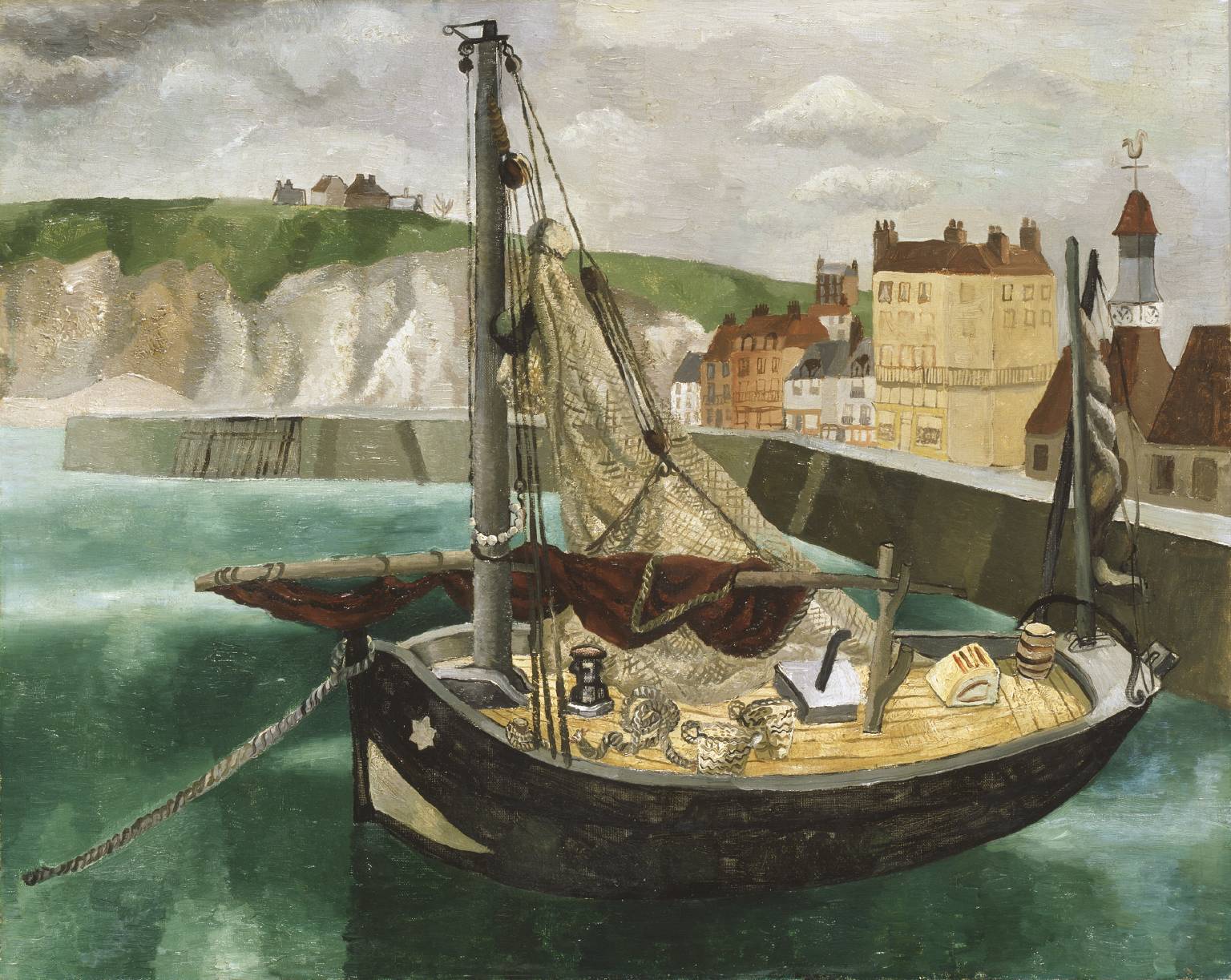
Christopher Wood, A Fishing Boat in Dieppe Harbour 1929
Wood travelled to the Normandy port of Dieppe with his friend Frosca Munster, describing it in a letter to his mother as ‘a very good painting place’. Dieppe attracted many artists to depict the town’s fishing fleets, including Walter Sickert and Georges Braque. In Wood’s picture, the influence of the naïve paintings of the St Ives artist Alfred Wallis (whom Wood met in 1928) may be observed in, for example, the scale of the boat in relation to the surrounding landscape and the receding line of houses on the shore.
Gallery label, September 2016
1/30
artworks in Reality and Dreams
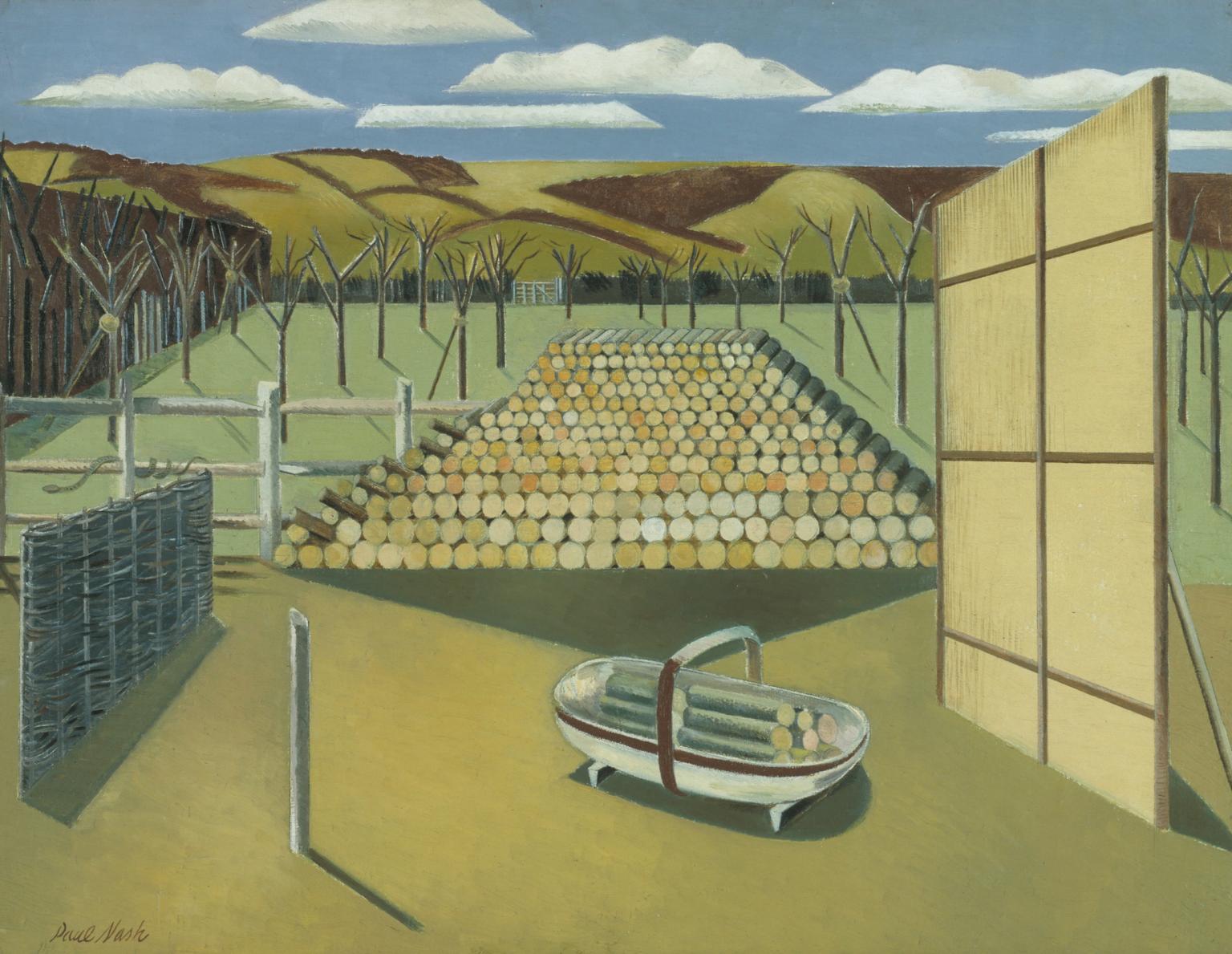
Paul Nash, Landscape at Iden 1929
This mysterious picture shows the view from Nash’s studio in Sussex. The dramatic perspective and strange juxtaposition of rustic objects creates a sense of the uncanny. It has been read as a statement of mourning. While the young fruit trees may suggest the defencelessness of youth, the altar-like pile of logs may be a symbol of fallen humanity; the fallen tree as a symbol for the dead was common in the art and literature of the war, not least in Nash’s own paintings.For many, an idea of the timeless and enduring English landscape seemed to displace the violent destruction of the war.
Gallery label, July 2007
2/30
artworks in Reality and Dreams
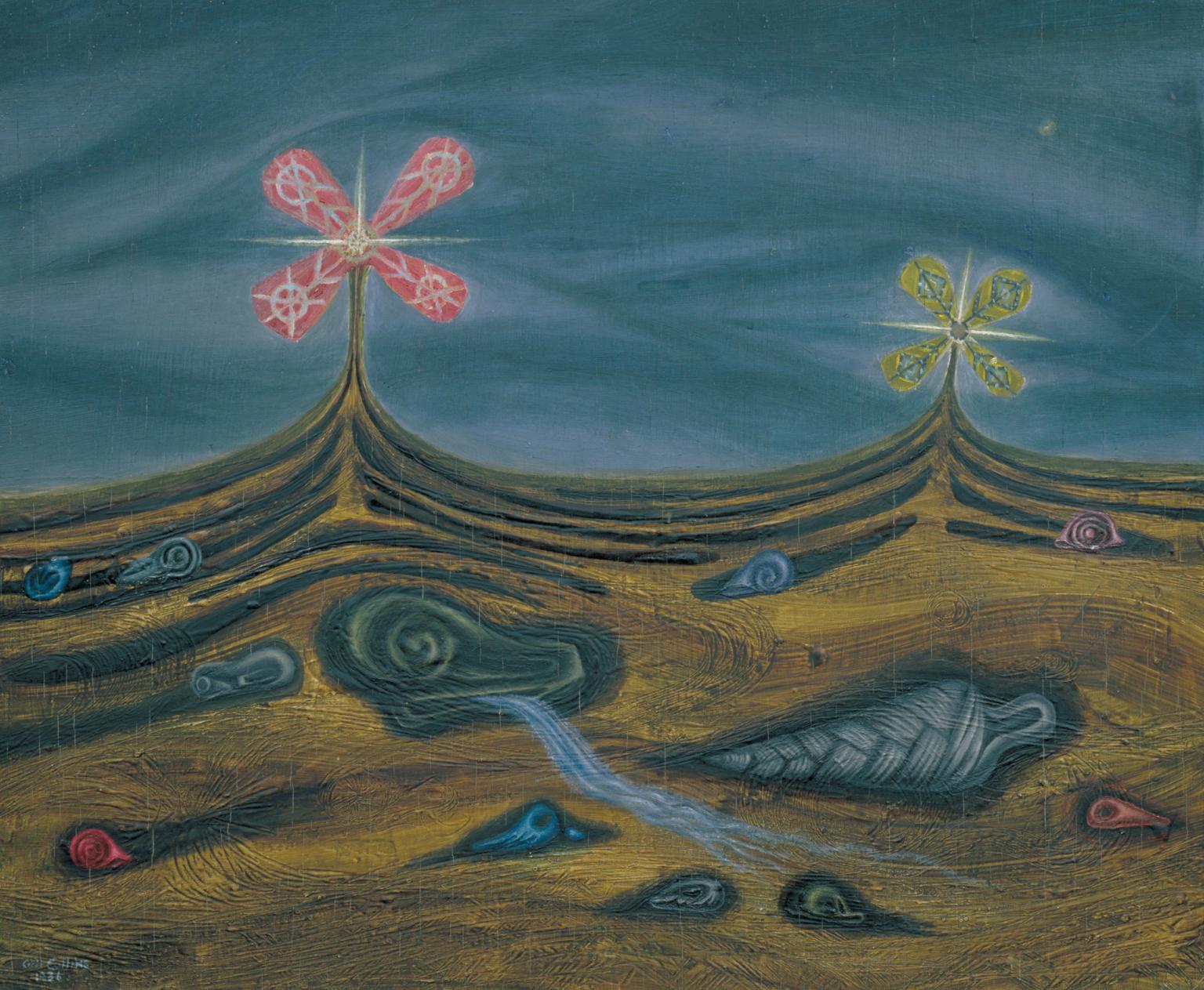
Cecil Collins, The Promise 1936
Cecil Collins often used light and darkness to symbolise the forces of good and evil. This painting depicts the world at night. It shows a section of the seashore, cut open to reveal seeds, shells and chrysalises lying below the ground. Two charges of energy erupt from the Earth’s surface and burst into the sky like radiant flowers. The ‘promise’ of the title refers to the coming dawn, signaling possibilities of birth and growth. Briefly linked with Surrealism, Collins showed a closely related work at the International Surrealist Exhibition in 1936.
Gallery label, January 2025
3/30
artworks in Reality and Dreams
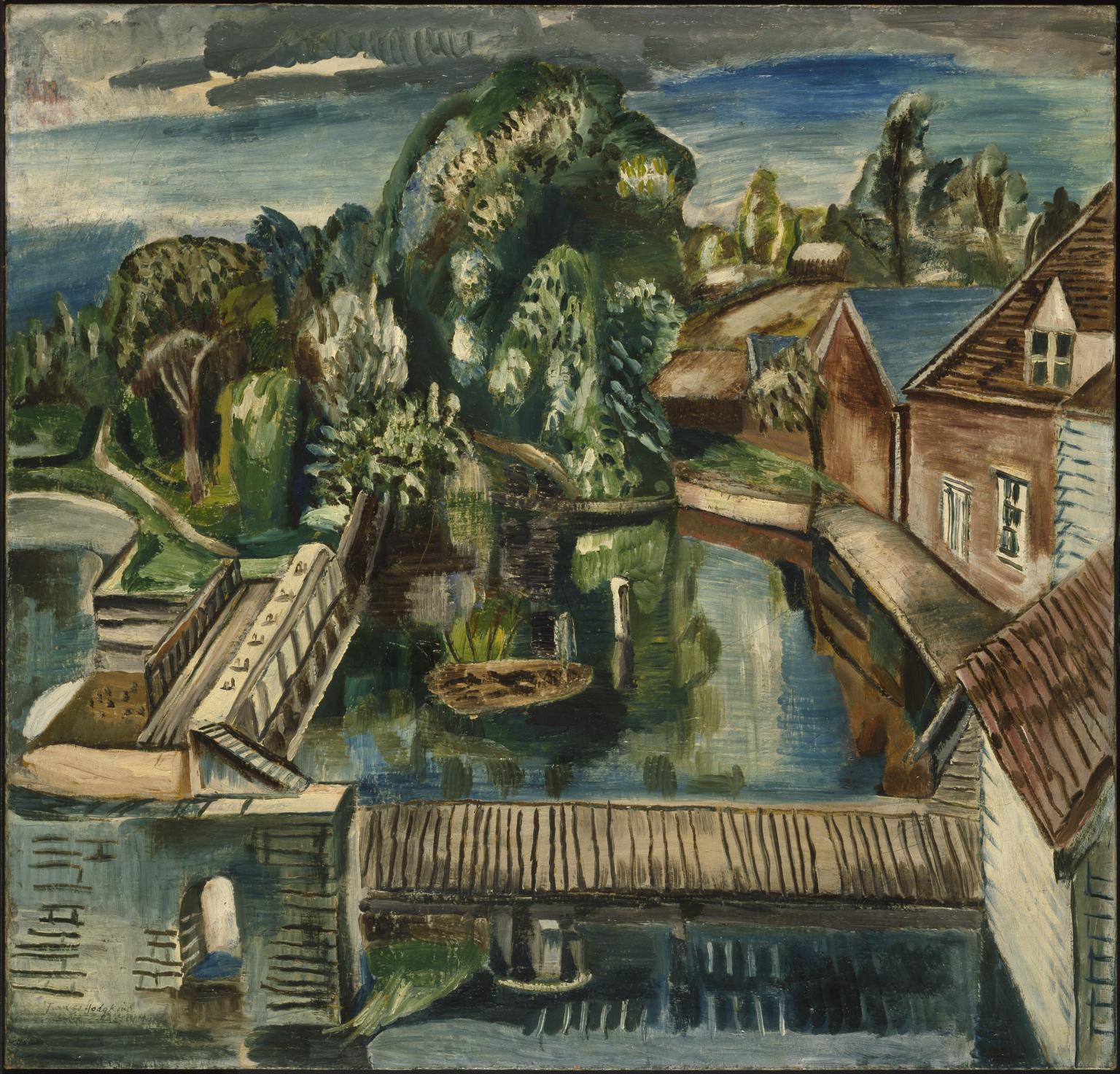
Frances Hodgkins, Flatford Mill 1930
Hodgkins was a New Zealander who came to Europe in 1901. Based mainly in Britain, she also spent time in Paris. She was a member of the Seven & Five Society. In the 1920s, its members developed an art that was both modern and returned to traditional motifs such as landscape and still life. A strong fascination with British landscape and traditions was evident. This is signalled, perhaps, by the fact that this scene was closely associated with John Constable who painted Flatford Mill in 1816.
Gallery label, September 2016
4/30
artworks in Reality and Dreams
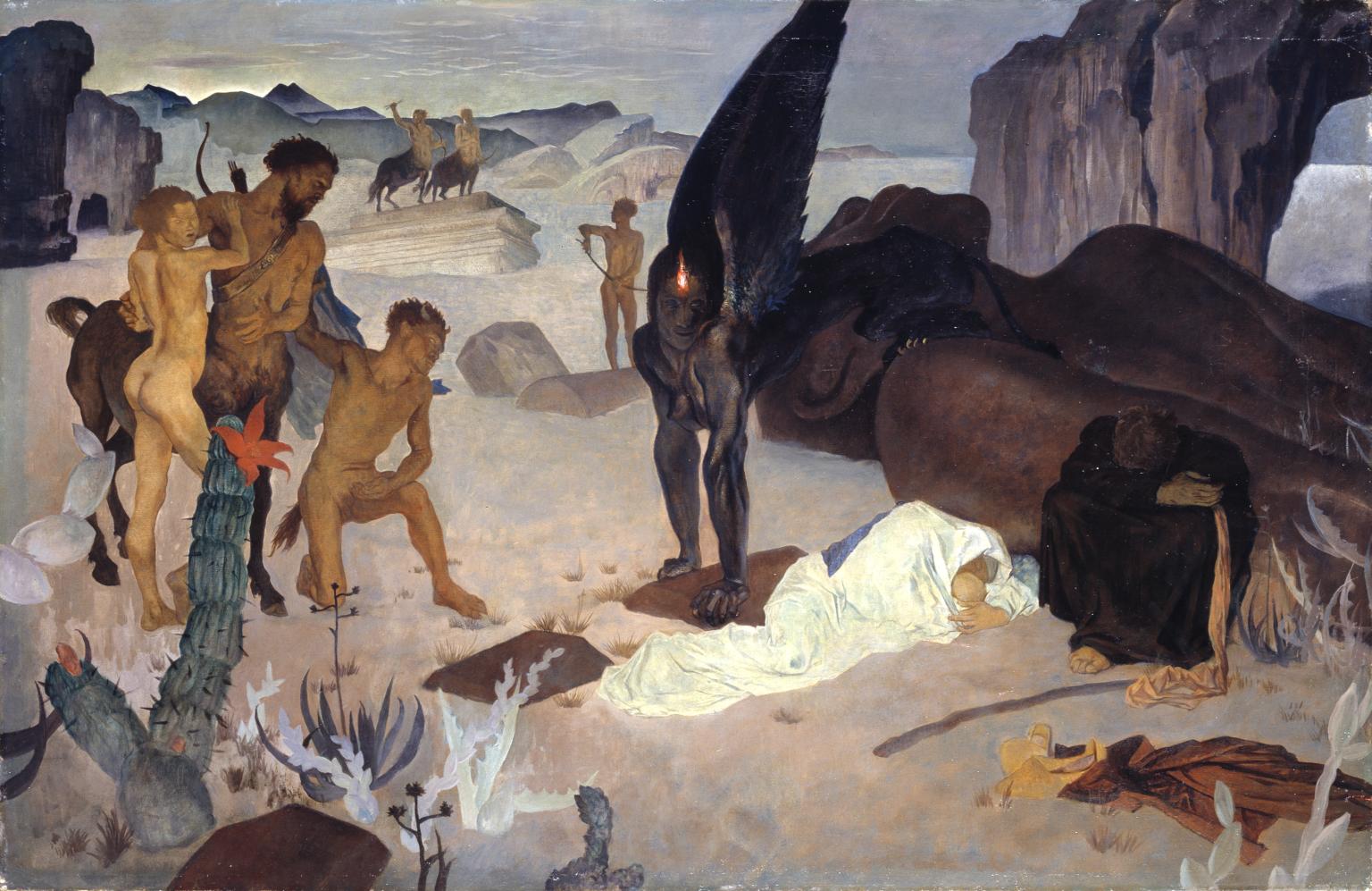
Glyn Warren Philpot, Repose on the Flight into Egypt 1922
Glyn Philpot brings an unusual interpretation to the subject of the Holy Family resting on the flight into Egypt by incorporating mythological figures including a sphinx, a satyr and three centaurs. Philpot’s presentation of the mythological creatures alludes to pagan myths of unrestrained sexuality, and the implication is that this will be replaced by the new religion of Christianity. The Holy Family are seen sheltering against a huge sculpture from a ruined building, fragments of which appear in the background. This dream-like work has been interpreted as an attempt by Philpot to reconcile his adopted Catholicism and his sexual attraction to other men.
Gallery label, March 2018
5/30
artworks in Reality and Dreams
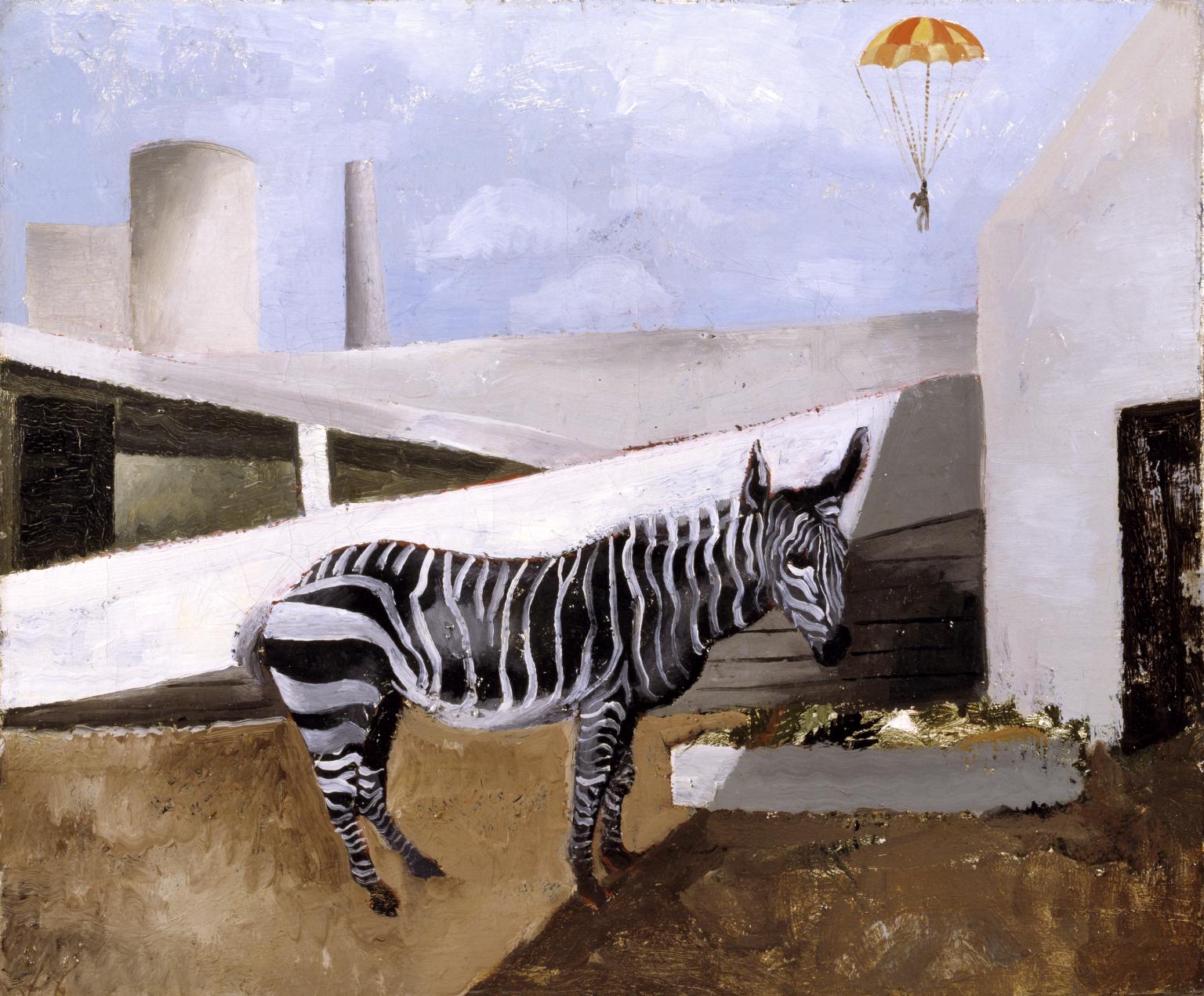
Christopher Wood, Zebra and Parachute 1930
A friend of the Surrealist poet René Crevel, Wood made a small number of paintings that seem to reflect the movement's harnessing of the unexpected. His placement of a zebra outside Le Corbusier’s modernist house, the Villa Savoie (then still under construction), suggests a deliberate confrontation of the surreal and the functional styles that were then dominant in Paris. The image is made more perplexing by the figure of the parachutist. This was one of Wood's last works: in a paranoid state, he fell under a train in August 1930.
Gallery label, July 2007
6/30
artworks in Reality and Dreams
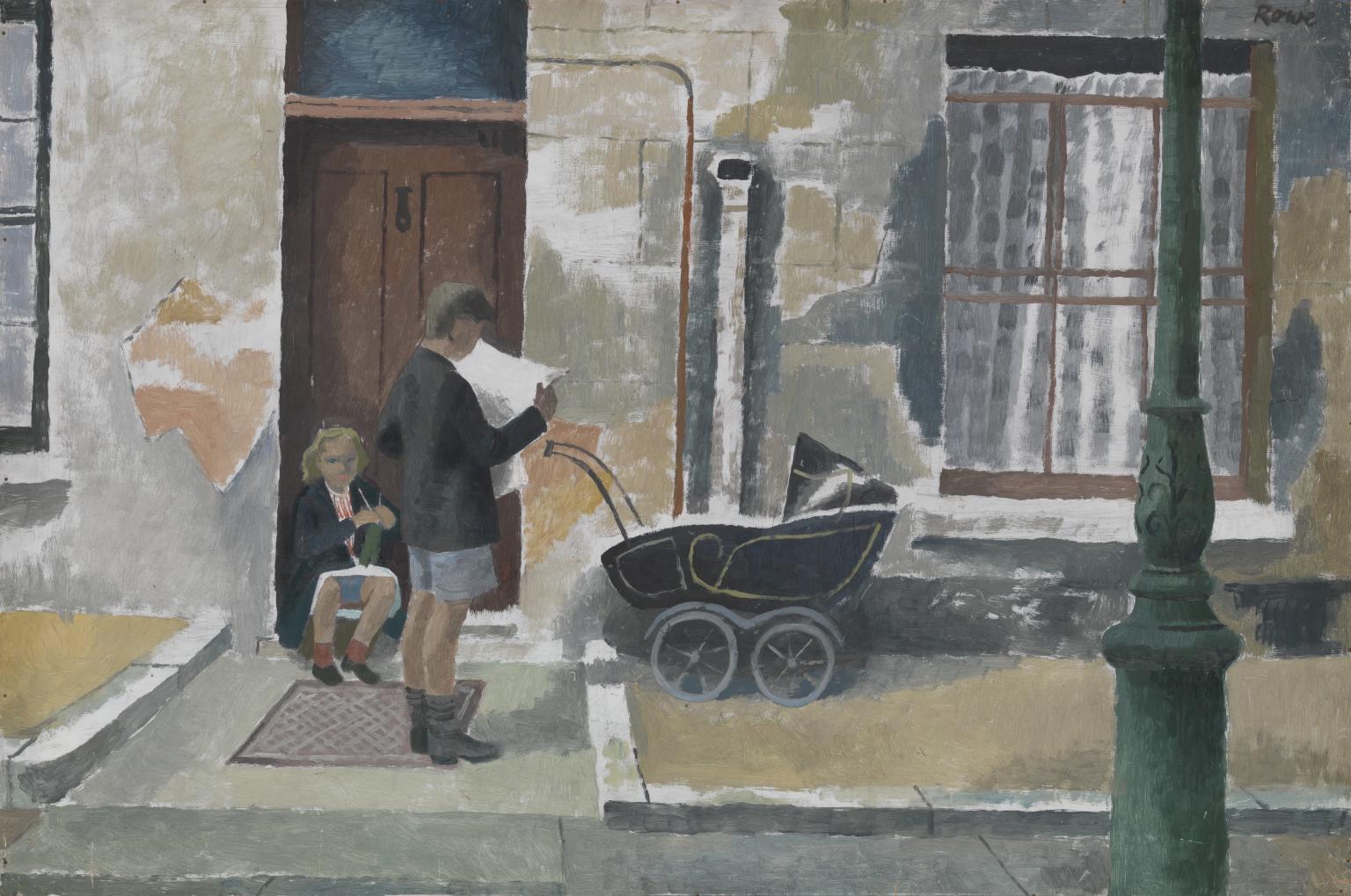
Cliff Rowe, Street Scene Kentish Town c.1931
7/30
artworks in Reality and Dreams
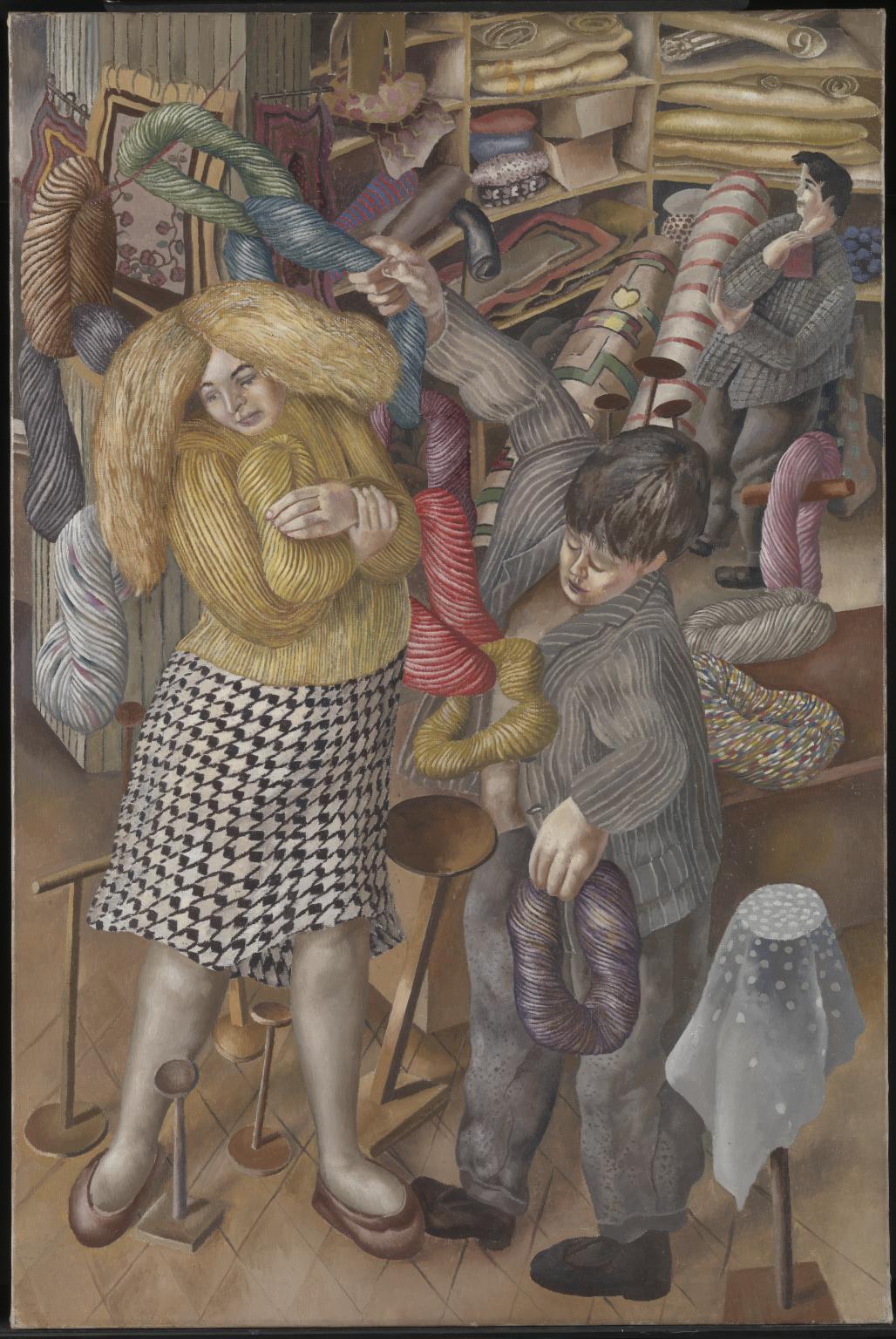
Sir Stanley Spencer, The Woolshop 1939
This work was inspired by Spencer’s visit to a wool shop with his friend Daphne Charlton while staying in rural Gloucestershire at the end of the 1930s. It originates in a series of drawings of Charlton and himself and was made in the wake of his turbulent relationship with his second wife, Patricia Preece, and after leaving his former home at Cookham in Berkshire. Spencer later recalled that ‘Stonehouse had several of these small local shops such as I remembered years ago in Cookham. The Cookham ones must have emigrated there.’
Gallery label, November 2016
8/30
artworks in Reality and Dreams
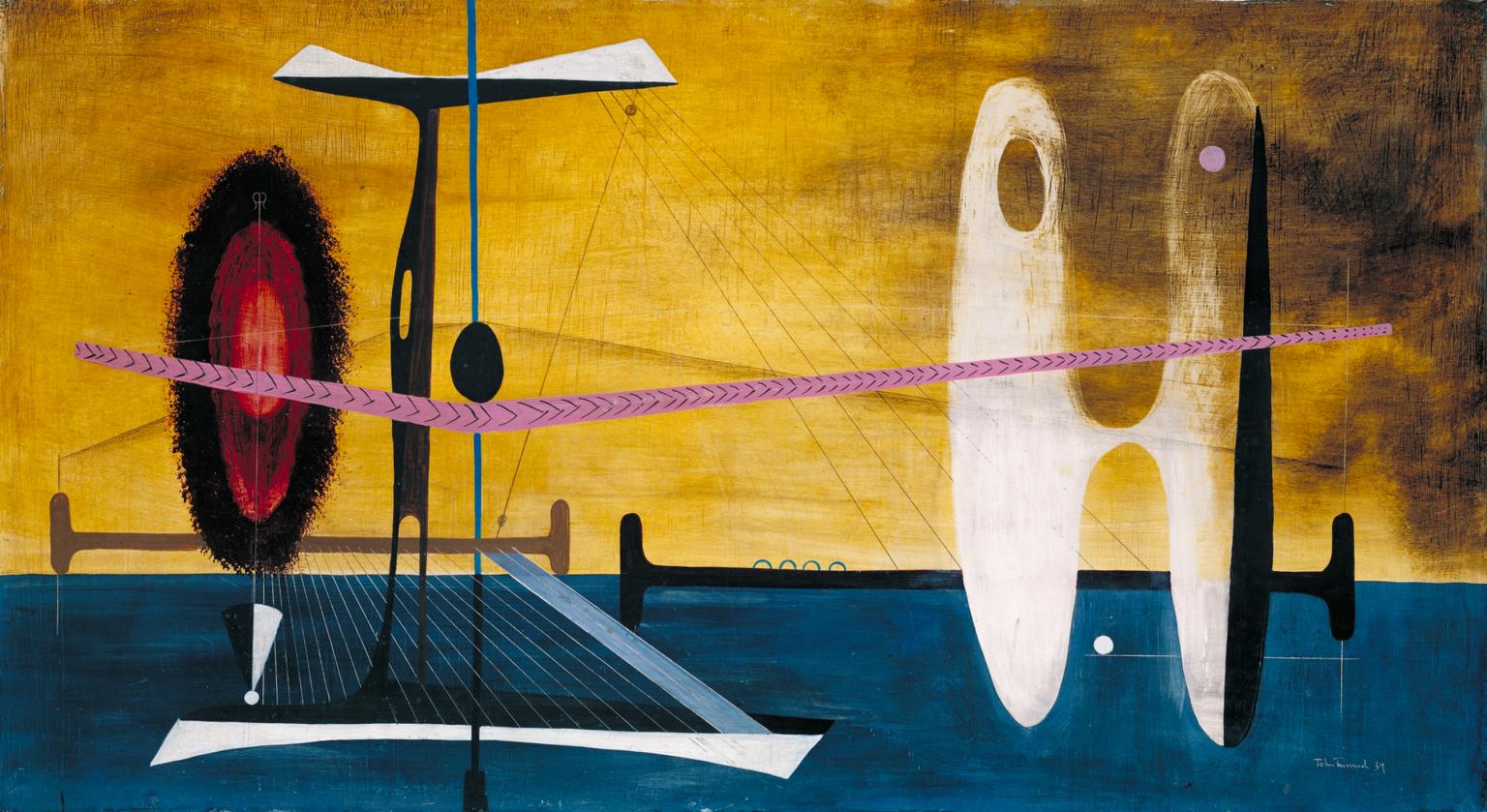
John Tunnard, Fulcrum 1939
An advocate of surrealism in Britain, Tunnard was interested in experimental techniques that summon an imaginative world. He developed a unique vision of quasi-mechanical structures in deep space that remain mysterious. Tunnard was taken up by the American collector Peggy Guggenheim and shown in her London gallery in 1939. The story goes that he crossed the private view to introduce himself to a prospective collector by turning three somersaults.
Gallery label, September 2016
9/30
artworks in Reality and Dreams
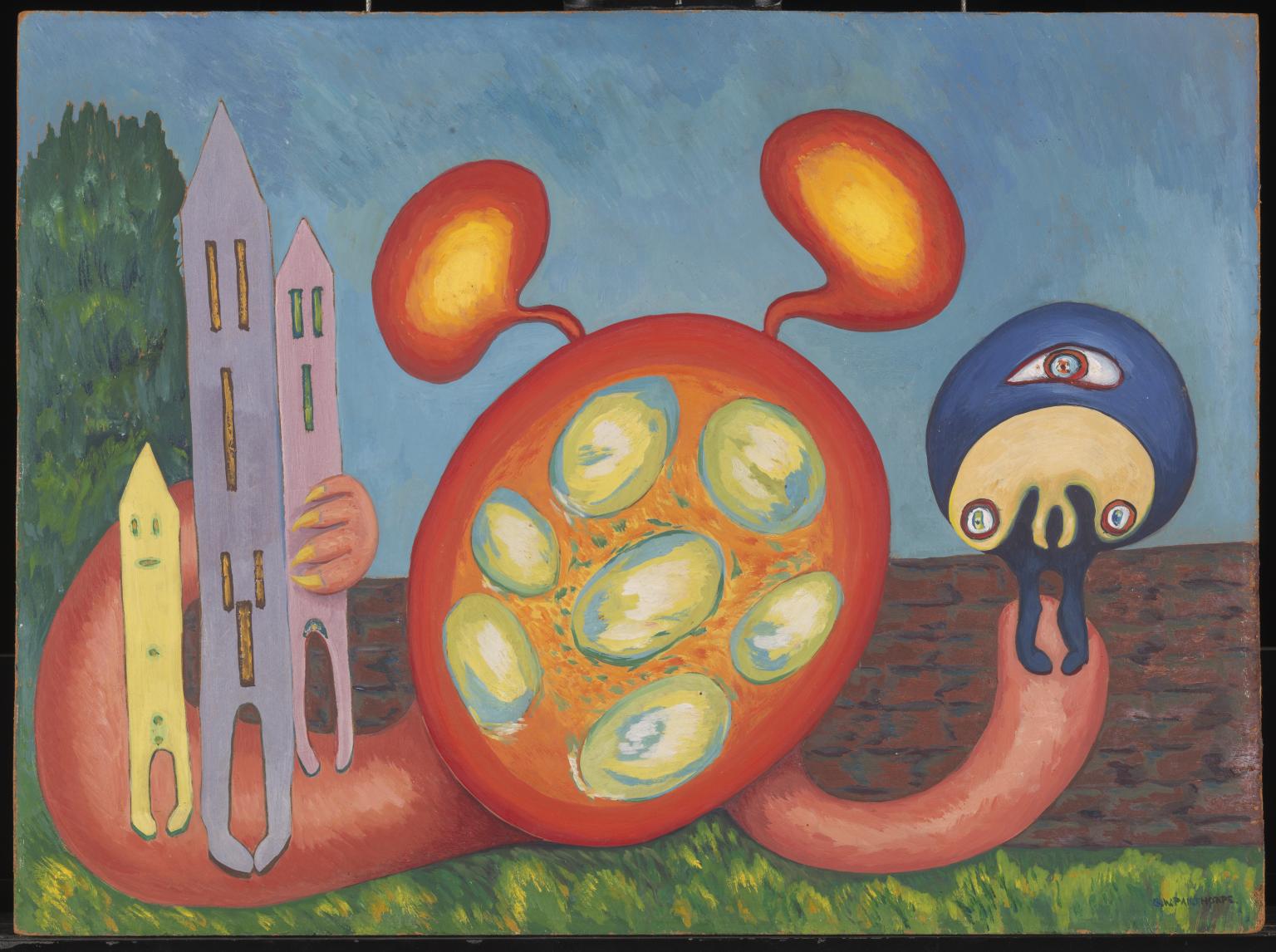
Grace Pailthorpe, April 20, 1940 (The Blazing Infant) 1940
10/30
artworks in Reality and Dreams
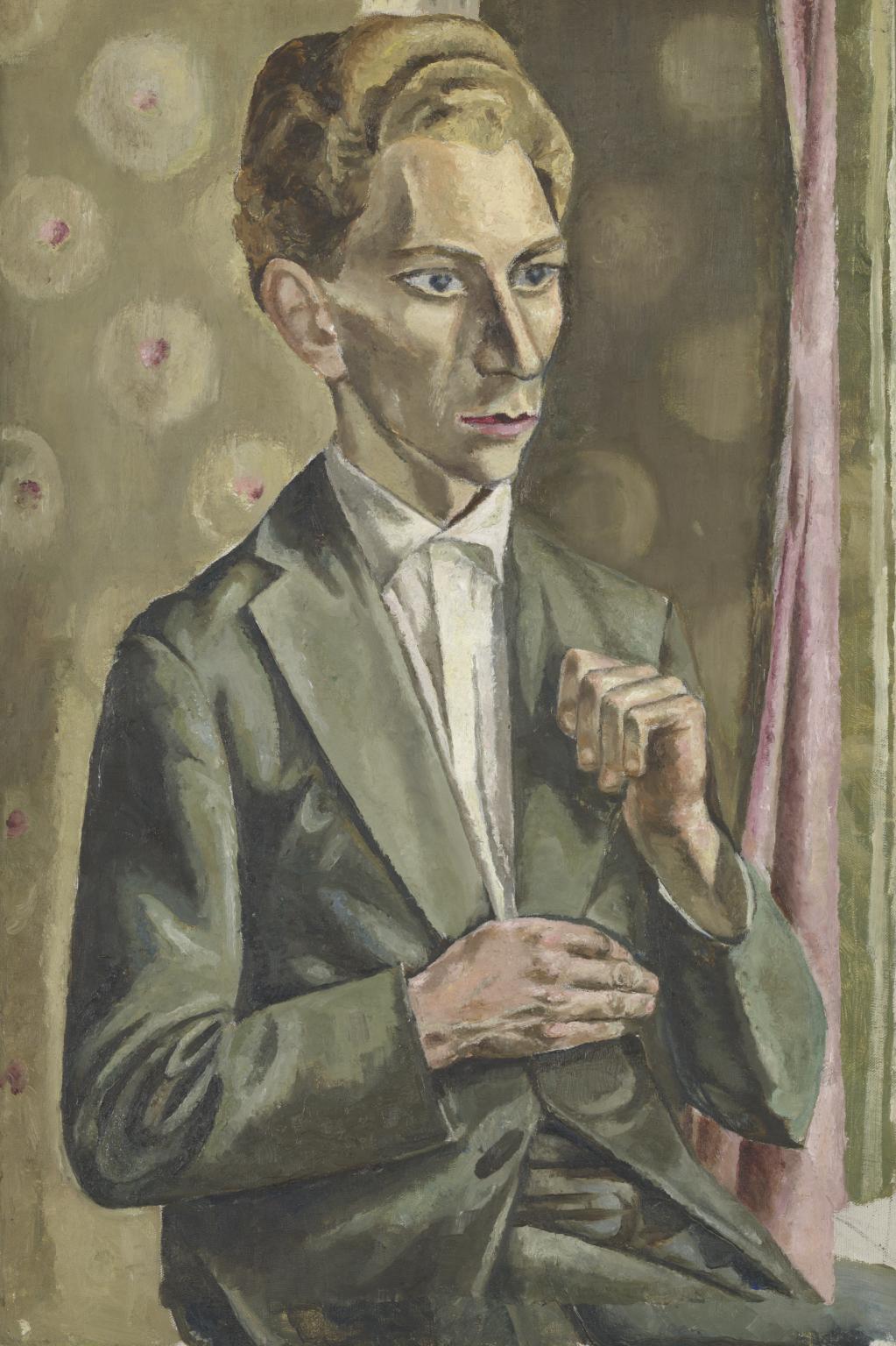
Marie-Louise Von Motesiczky, Portrait of a Russian Student 1927
Portrait of a Russian Student 1927 depicts a young man with blonde hair seated in an interior setting. He is dressed formally in a grey suit and white shirt, the sober tones of which contrast with the green and pink patterned wallpaper behind him and the pink curtain at the right edge of the composition. His face has an intense, serious expression accentuated by his thin angular features and staring eyes, but most expressive of emotion are his hands. These are held in mid-air, perhaps in the act of gesticulating nervously, accentuating the impression of tension and anxiety. The identity of the sitter is unknown, but Motesiczky’s brother Karl was in contact with Russian scholars at the time that the portrait was painted, and she most likely met him through her brother. The work was probably painted in Paris while Motesiczky was studying at the Académie de la Grande Chaumière in Montparnasse. The simplified, angular forms and sparse setting, as well as the sober realist treatment of the figure, show Motesiczky adopting the formal approach of the Neue Sachlichkeit movement, with whom Max Beckmann (1884–1950), her mentor, exhibited in 1925. Like many of her early works, the background is divided into two sections, representing two walls of a room, the corner located behind the sitter’s head. The wall behind the sitter’s right shoulder is lit by light from the window on the right, while the other wall is in shadow. The muted colours are punctuated by flashes of pink in the wallpaper, curtain and sitter’s lips.
11/30
artworks in Reality and Dreams
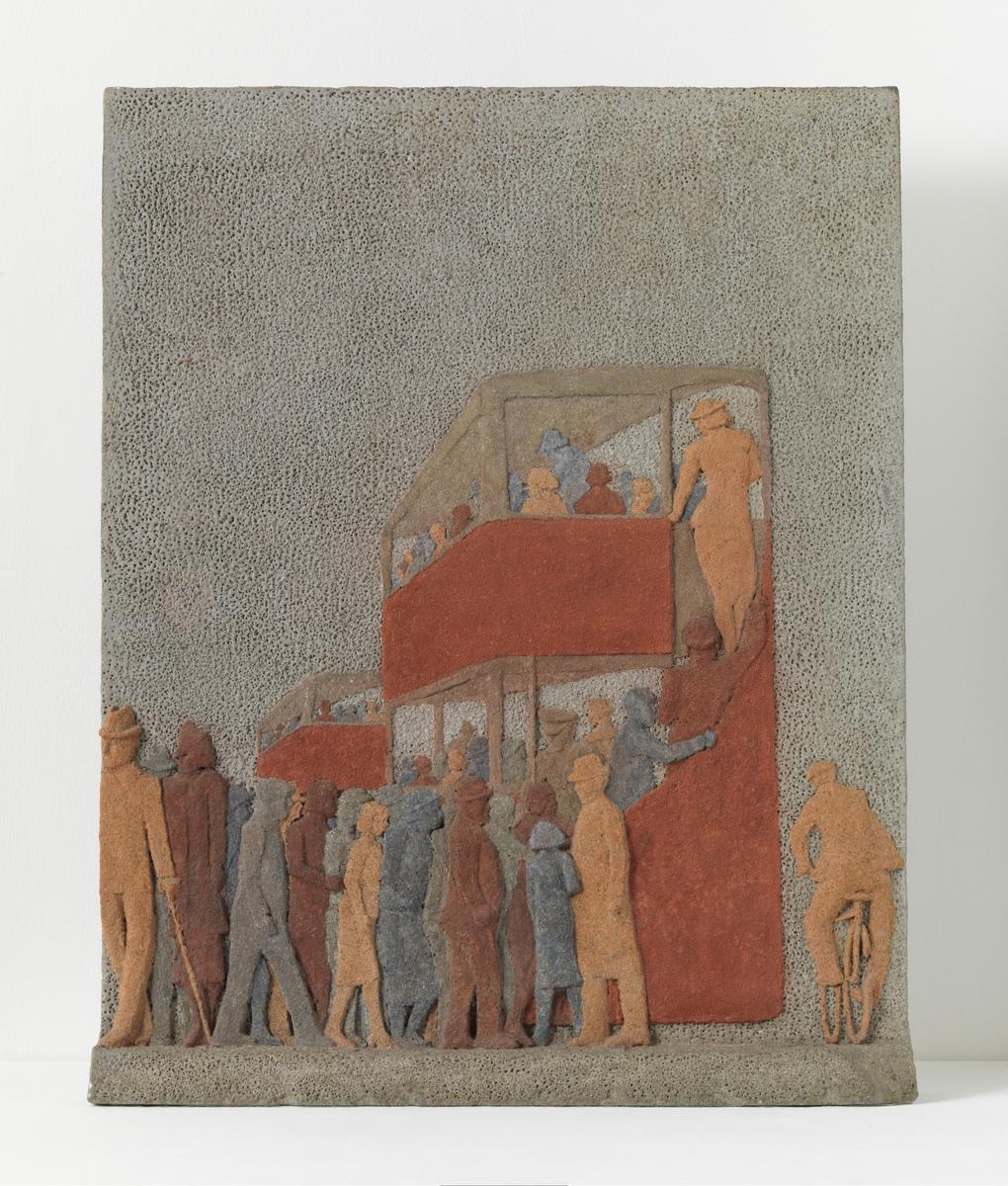
Peter László Peri, Rush Hour 1937
Rush Hour 1937 is a work in low relief that depicts men and women boarding a double-decker London bus which is full of seated passengers. They crowd around the pavement and ascend the spiral staircase at the back of the bus as the conductor looks on. The street scene also includes a cyclist passing the bus on the right-hand side and another bus further in the distance. The scene combines realism and abstraction in its precise observation of the actions of people in everyday situations set against the simplified rectangular shapes of the two buses. The work is executed in coloured concrete low-relief, the grey, blue and terracotta forms of the people and buses set against a pale grey background. Peri developed a method of modelling concrete directly rather than casting it; keeping it moist and malleable, he gradually built up his compositions using different colours of concrete. His use of concrete was both utilitarian and egalitarian and his work had a conscious political agenda intended to broaden the social reach of art by representing ordinary people and by appealing to a wide public.
12/30
artworks in Reality and Dreams
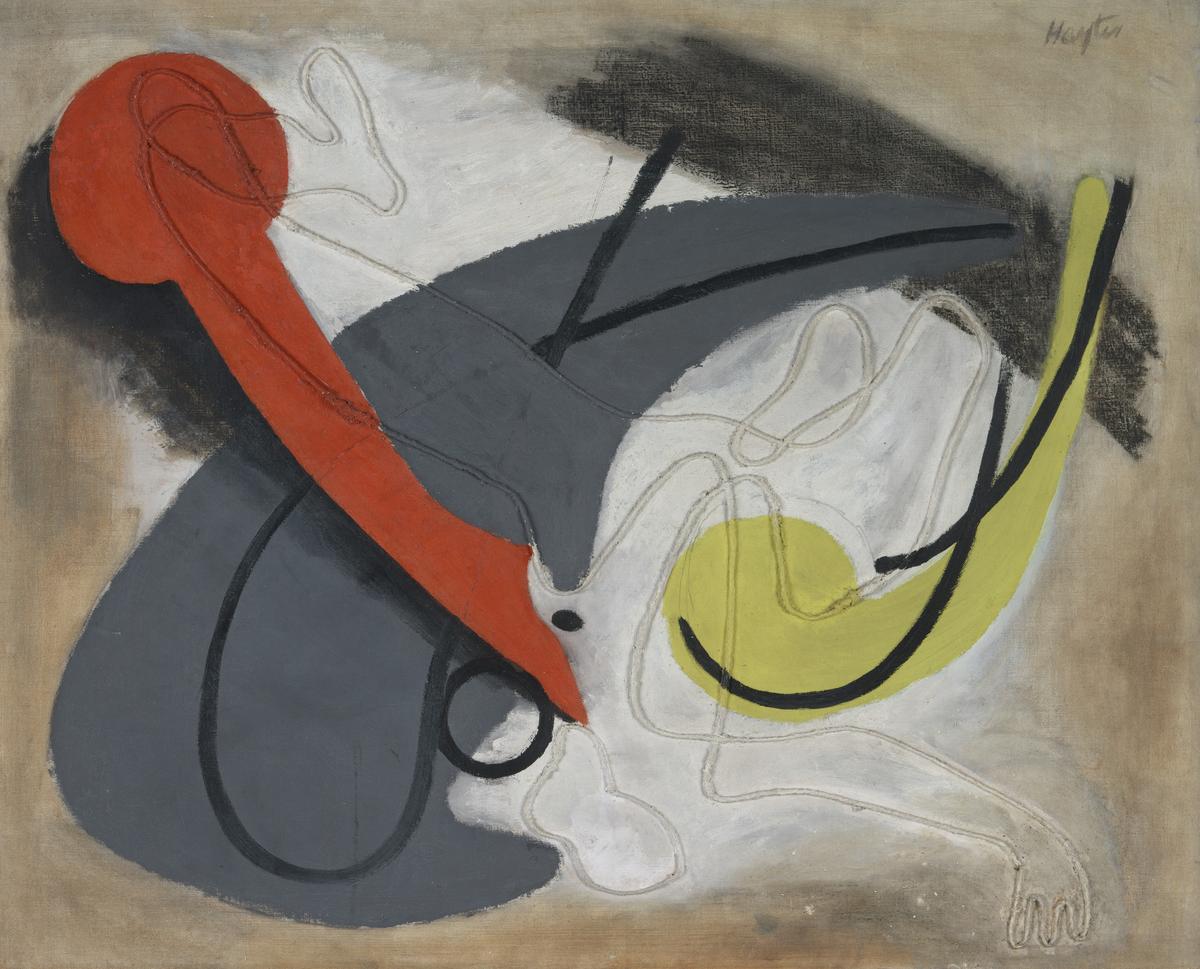
Stanley William Hayter, Murder 1932–3
Murder 1932–3 is a painting that is read as both an abstract composition of shapes, lines and colour, and a semi-figurative scene. The title ‘Murder’ encourages the viewer to associate its forms with the violent act of killing, and so parts suggesting the human figure take on added narrative and emotional significance. Further detail of the narrative content (who is involved in the murder, as well as when and where it takes place) remains unspecified.
13/30
artworks in Reality and Dreams
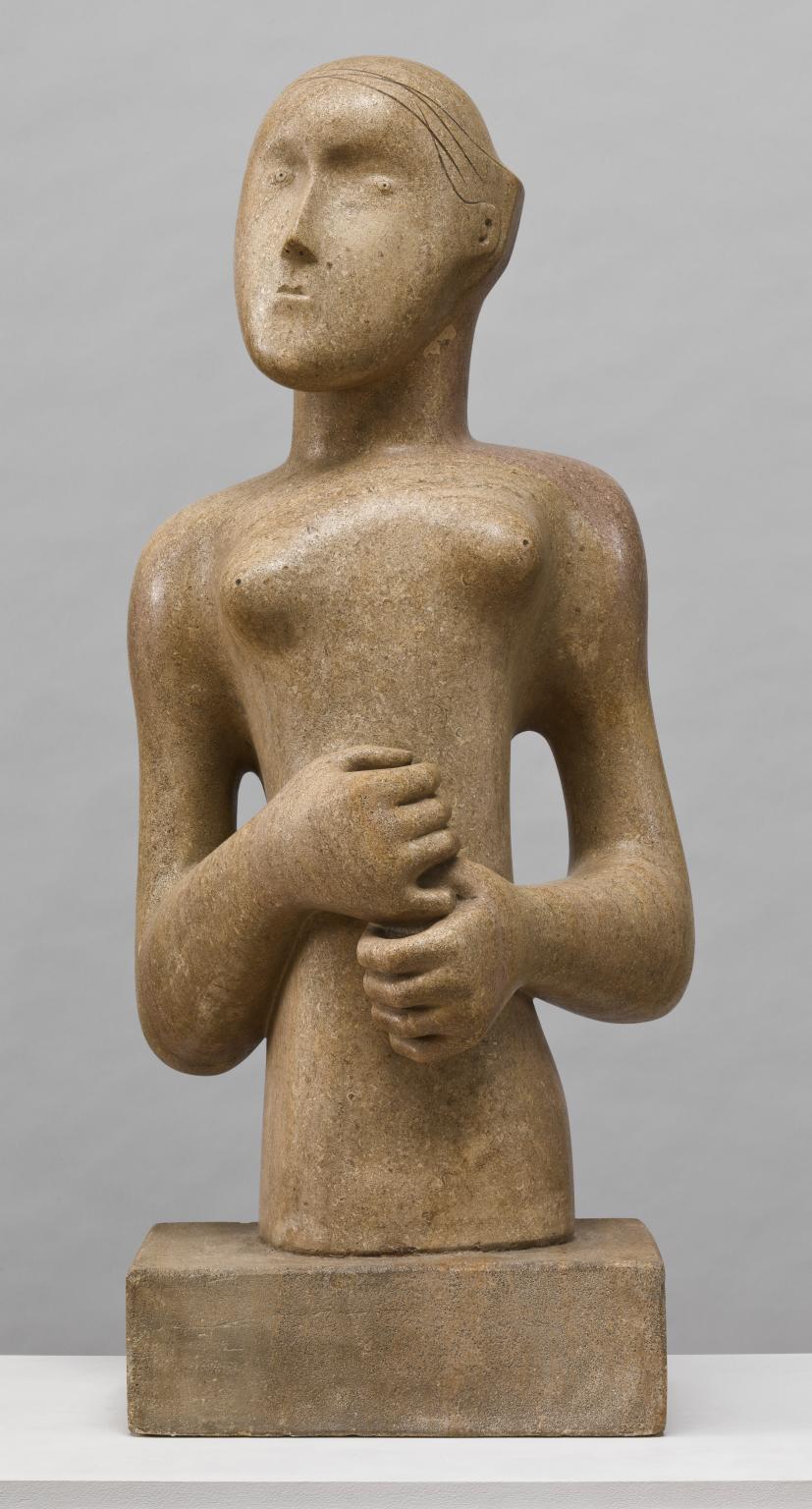
Henry Moore OM, CH, Girl 1931
From the mid-1920s Moore had advocated the abolition of the 'Greek ideal' in sculpture in favour of non-European sources, which he felt had much greater vitality. This work reveals his fascination with the Mesopotamian sculptures in the British Museum, especially solemn standing figures with clasped hands. He reviewed a book on Mesopotamian art for 'The Listener' in June 1935. Around 1931-2 Moore also turned his attention to the study of natural forms, such as shells, bones and pebbles. He then brought together his studies in natural forms with his admiration for non-European 'primitive' sculpture and began to introduce a rhythmic and non-naturalistic approach to the depiction of the human figure.
Gallery label, August 2004
14/30
artworks in Reality and Dreams
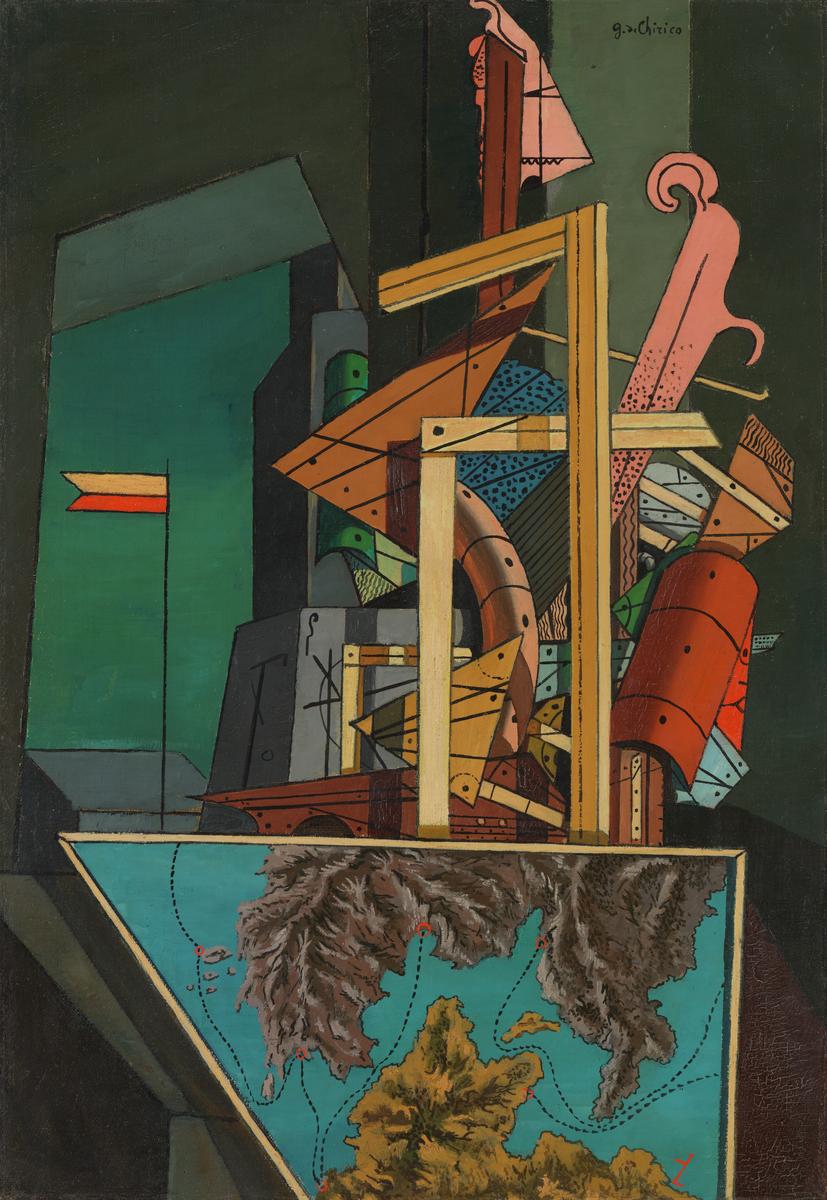
Giorgio de Chirico, The Melancholy of Departure 1916
De Chirico painted The Melancholy of Departure after he returned from Paris to Italy to serve in the First World War. The window and the map with a traced route evoke ideas of travel, suggesting escape from a cluttered, claustrophobic studio. Even as a child in Greece, de Chirico felt detached from his surroundings and identified with the voyaging Argonauts of Greek mythology. He imagined their journey across ‘measureless oceans’, an atmosphere which the Paris Surrealists saw as anticipating their own concerns.
Gallery label, January 2022
15/30
artworks in Reality and Dreams
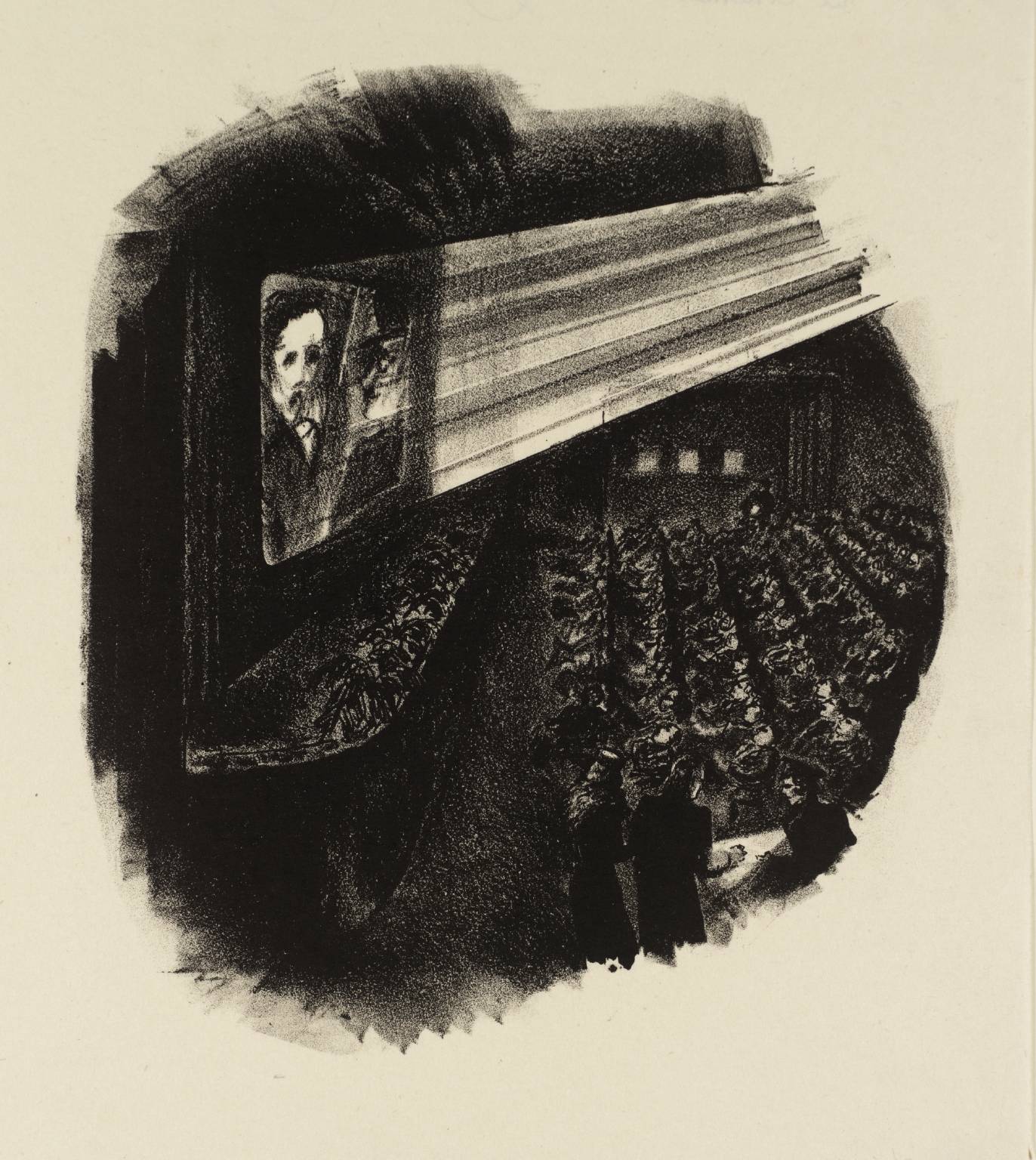
James Boswell, The Cinema 1939
When Boswell joined the Communist Party in 1932 he gave up painting and began to produce graphics for mass reproduction. The prints shown here were made as a result of the many evenings and weekends that he spent exploring the streets and pubs of working-class London, especially in Camden where he lived.
Boswell was a founder member of the Artists International Association. This group of artists and designers was formed in 1933 in response to the increasing threat of Fascism and the economic crisis in Britain.
Gallery label, September 2004
17/30
artworks in Reality and Dreams
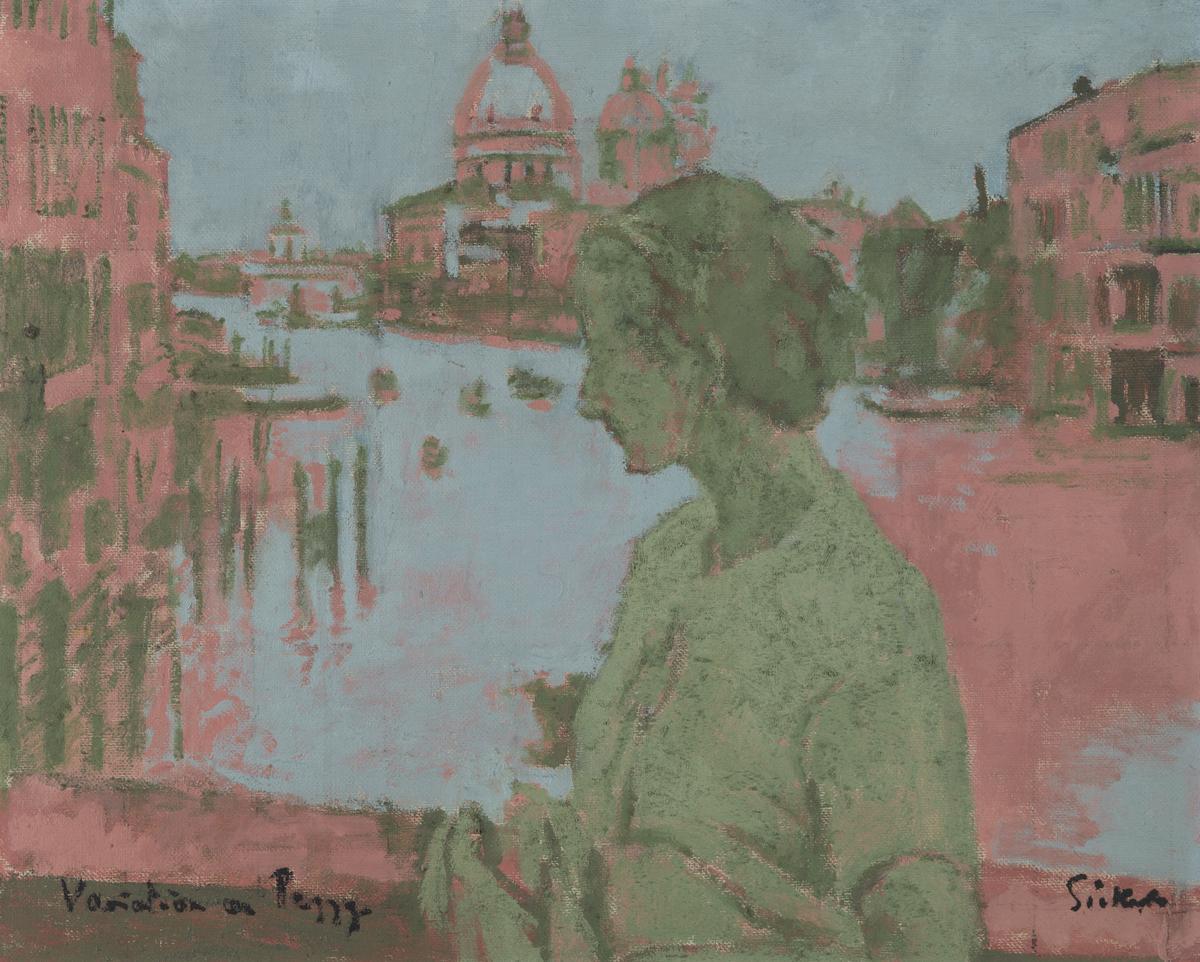
Walter Richard Sickert, Variation on Peggy 1934–5
Sickert loved the theatre. He had admired the actress Peggy Ashcroft from one of her earliest stage appearances, as Desdemona in Shakespeare's tragedy Othello in 1930. This portrait was painted when Sickert was in his seventies; at this stage he often chose his subjects from newspaper images, in this case a photograph from the Radio Times of the actress on holiday in Venice. The painting's dry, grainy texture, and non-naturalistic, shadowless colouring puts a distance between background, figure and viewer. This painting combines two of Sickert's favourite themes: Venice and theatre.
Gallery label, August 2004
18/30
artworks in Reality and Dreams
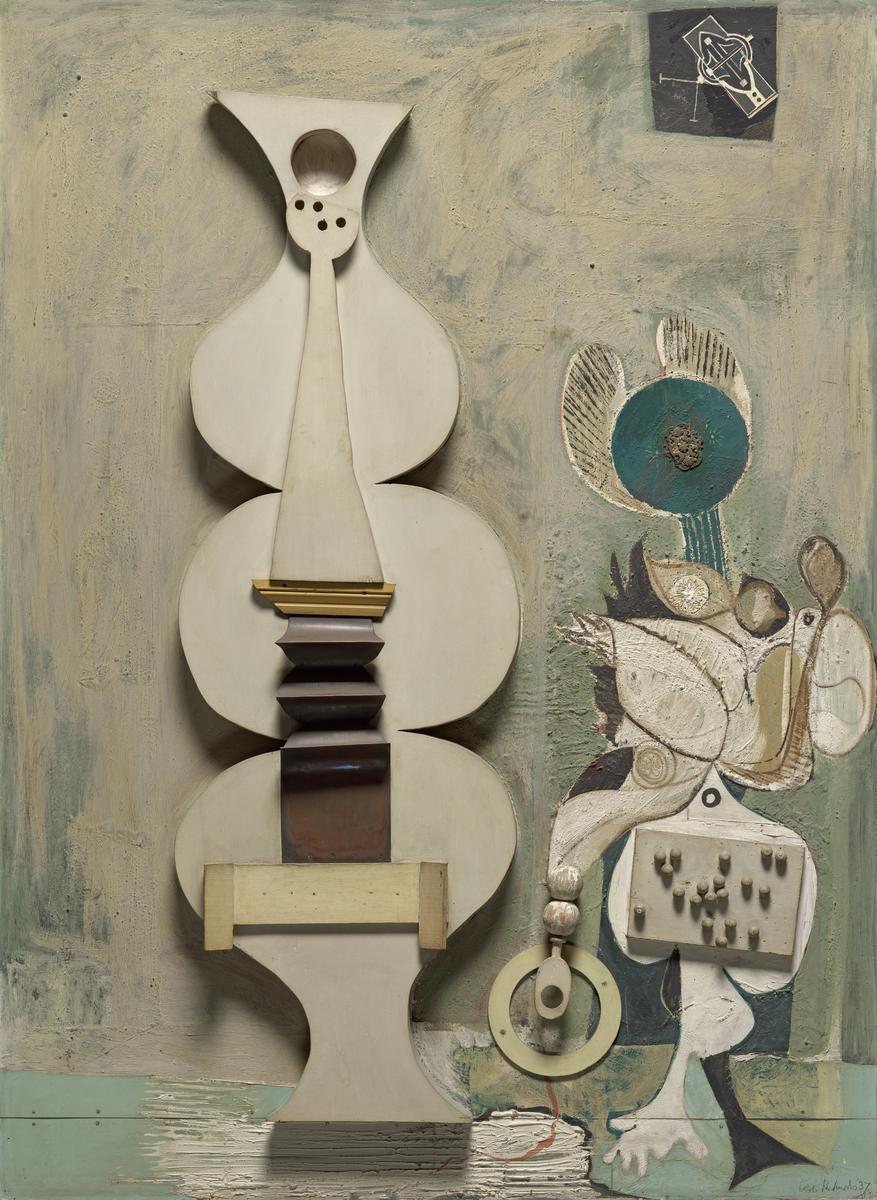
Ceri Richards, Two Females 1937–8
The International Surrealist Exhibition was held at the Burlington Galleries in the summer of 1936, and for a brief moment, in the words of André Breton, London was ‘the centre of the Surrealist universe’. Richards exhibition gave him an opportunity to study important works by Ernst, Picasso and Miro, among others. Subsequently a pronounced erotic sensibility became apparent in Richards’s own loosely surreal work. Two representations of the female form are contrasted in this relief. On the right, virginal, though budding and seductive, and on the left, fulsome and latently sexual.
Gallery label, September 2016
19/30
artworks in Reality and Dreams
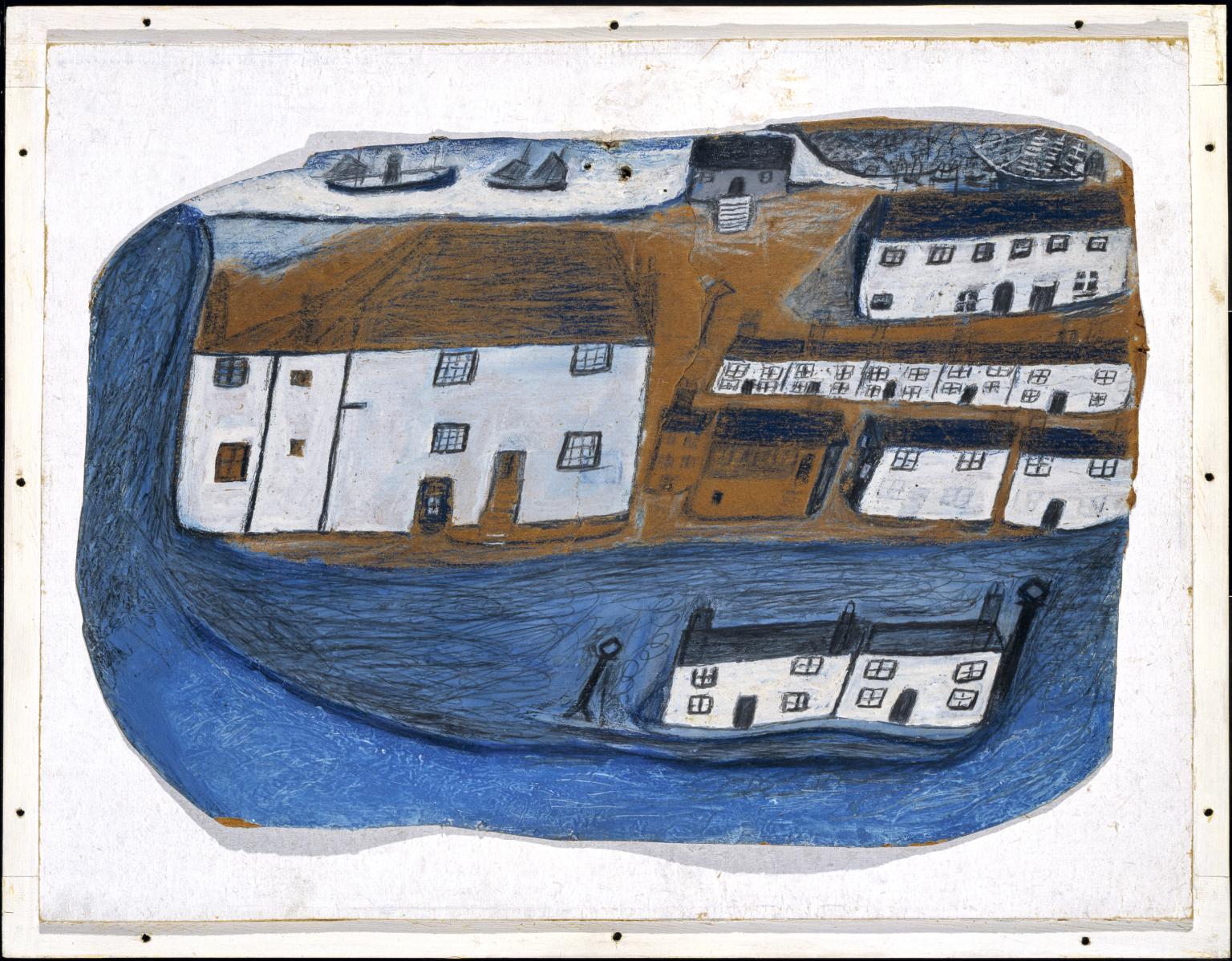
Alfred Wallis, St Ives c.1928
Wallis had worked as seaman, ice cream vendor and scrap merchant before he took up painting as a hobby in his retirement. He lived in St Ives, Cornwall, a fishing community and artists’ colony. There he encountered the painters Ben Nicholson and Christopher Wood and his work was shown with theirs in London. Most of his paintings are of his local environment or of places and events remembered from his past.
Gallery label, July 2017
20/30
artworks in Reality and Dreams
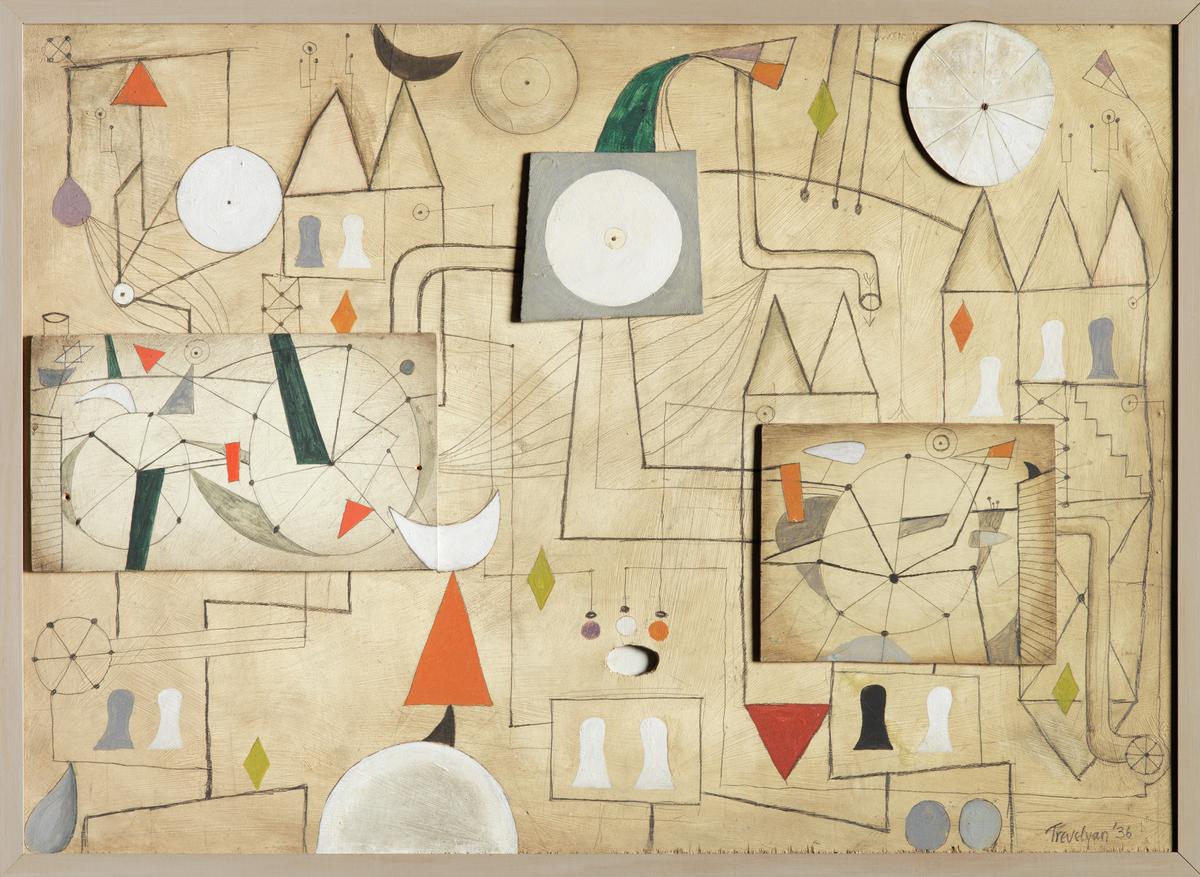
Julian Trevelyan, A Symposium 1936
Trevelyan became interested in Surrealism while at Cambridge, and came to know many of the movement’s leading artists when he lived in Paris in 1931-4. Influenced by Klee and encouraged by his friendship with Miró and Calder, he gradually developed his own mode of abstract Surrealism. In A Symposium Trevelyan combined painting and carving and attached parts to the wooden panel. He later recalled: ‘I had invented a sort of mythology of cities, of fragile structures carrying here and there a few waif-like inhabitants.’
Gallery label, December 2005
21/30
artworks in Reality and Dreams
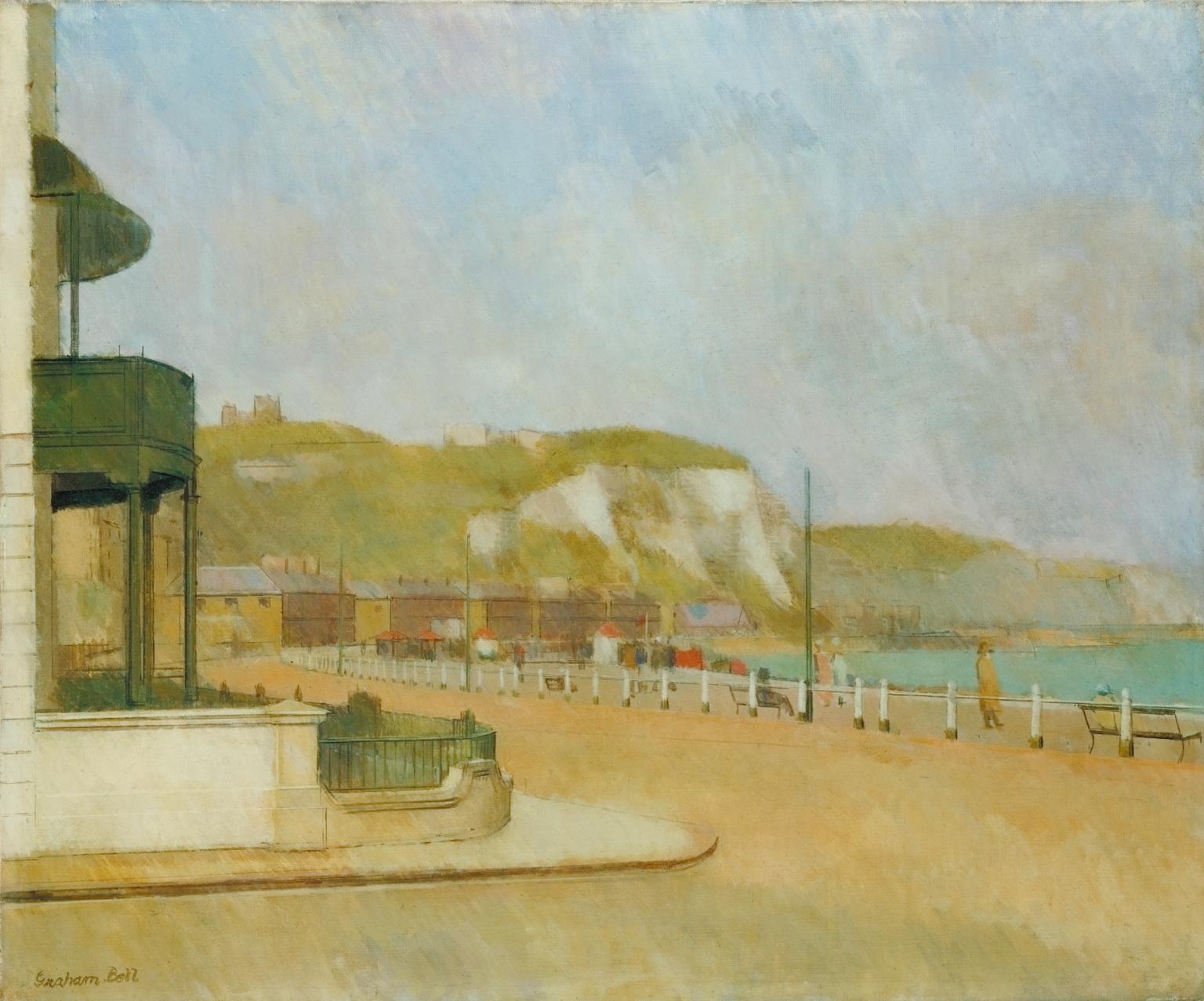
Graham Bell, Dover Front 1938
Bell painted this picture on a trip to Dover in 1938 to fulfill a commission for the International Business Machines Corporation. The finely-observed detail of the hotel on the left, the chalk white cliffs and castle ramparts is typical of the realism of the Euston Road School, with which Bell was closely involved.
Although the artist painted on the spot, he may have used the photograph shown to the left to work on the details in his studio.
Gallery label, September 2004
22/30
artworks in Reality and Dreams
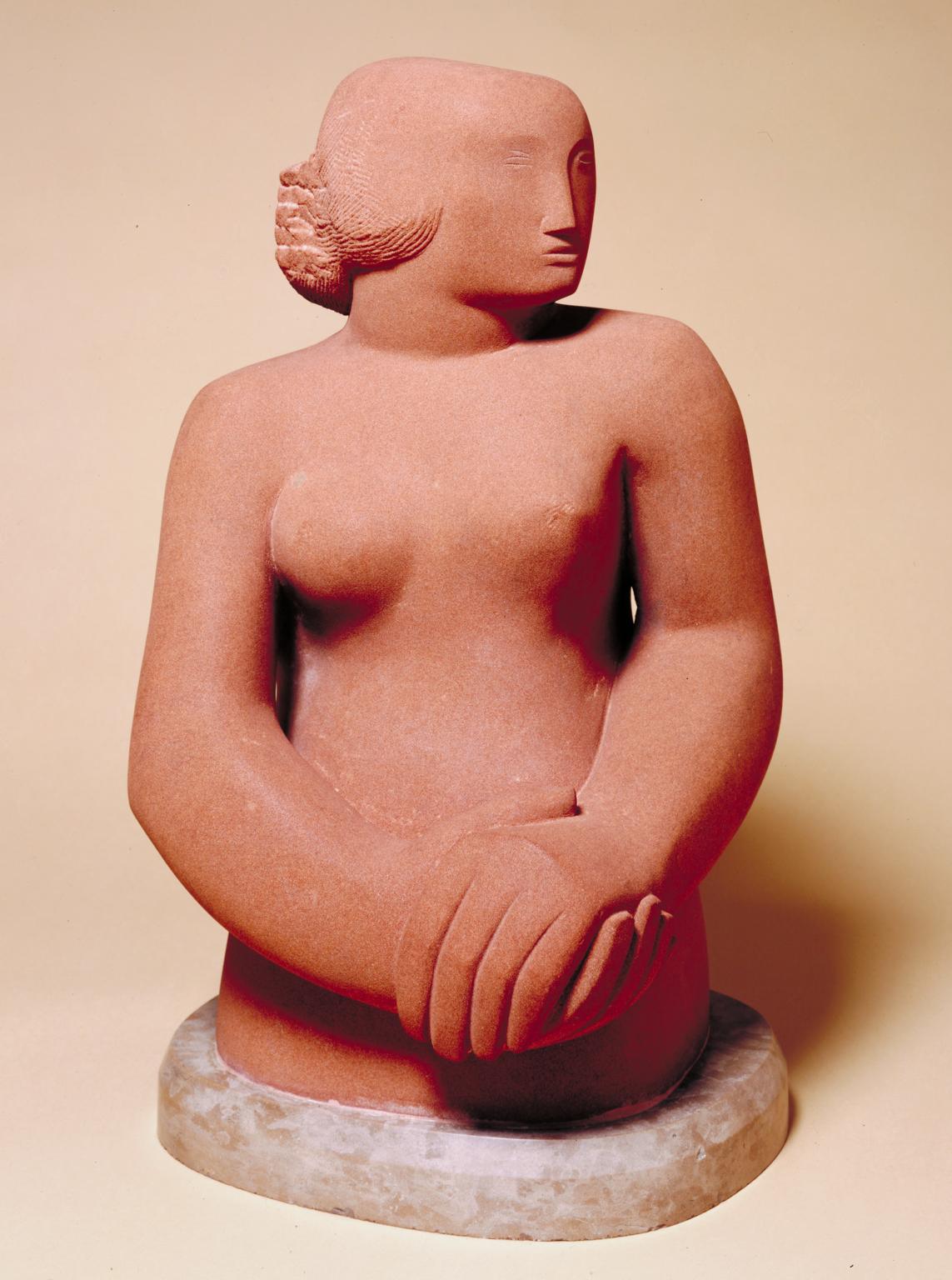
Dame Barbara Hepworth, Figure of a Woman 1929–30
Hepworth was one of a number of sculptors who returned to the handcraft of carving. The resulting immediacy of the artist’s relationship to her material was crucial. She described her process as an ‘effort to find a personal accord with the stones...I was fascinated by the kind of form that grew out of each sculpture, and by the kind of form that grew out of achieving a personal harmony with the material’.Like others, she sourced a wide range of indigenous British stones. This figure is made of Corsehill stone, a red sandstone quarried in Dumfriesshire.
Gallery label, July 2007
23/30
artworks in Reality and Dreams
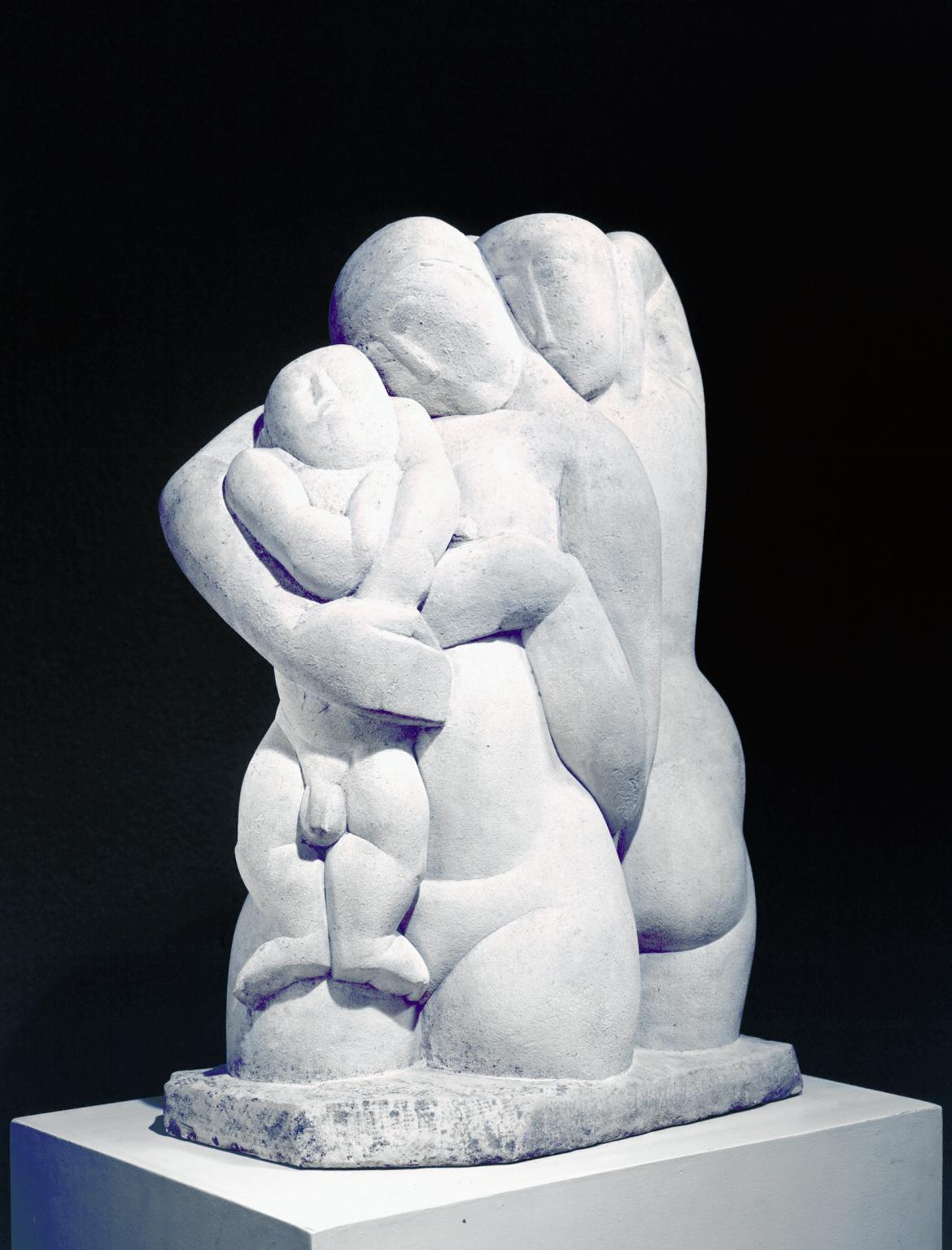
Frank Dobson, The Man Child 1921
Dobson trained as both a painter and sculptor, but concentrated on sculpture after active service in the First World War. Like many of his contemporaries, he found inspiration for his work in the ethnographic collections of the British Museum. He particularly admired carvings from the Congo in Africa. Such interest in what had been considered ‘less civilised’ cultures became more widespread after the ‘sophisticated’ destruction of the war.Here, in the wake of conflict, Dobson returns to fundamental human relationships. The manchild of the title melds with two female figures who seem to embody maternal protection expressing both joy and fear for the new life.
Gallery label, July 2007
24/30
artworks in Reality and Dreams
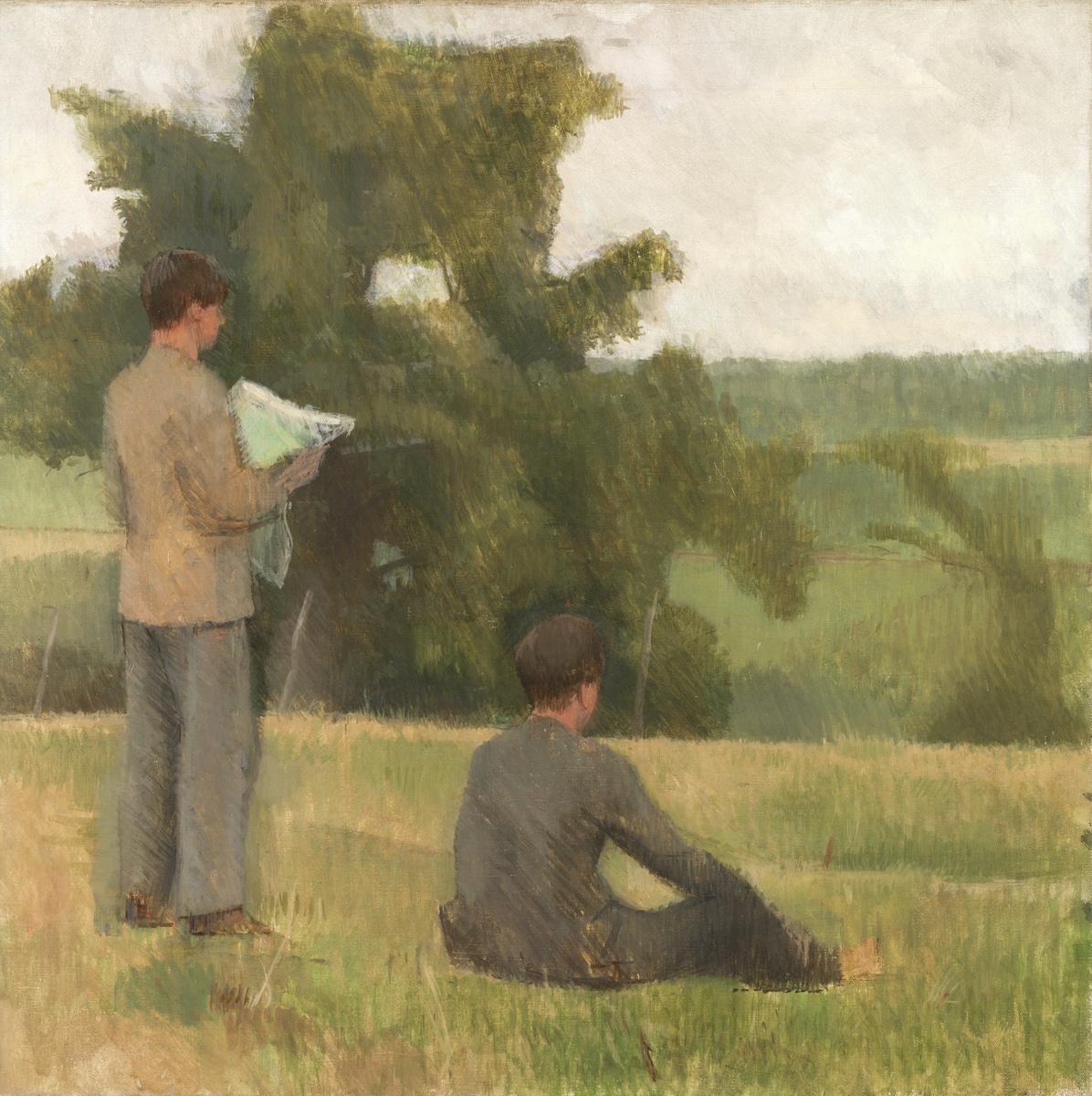
Sir William Coldstream, On the Map 1937
In this picture Coldstream shows fellow-artist Graham Bell standing holding a map, and his friend Igor Anrep sitting on the ground. Seen from behind, they look out across the landscape, apparently unaware of the painter’s presence. This conceit recalls such paintings as Degas’s Femme à sa Toilette, which Coldstream had praised for its ‘unbiased observation’. Such observation was to be a fundamental part of his painting from 1937 onwards.
Gallery label, September 2004
25/30
artworks in Reality and Dreams
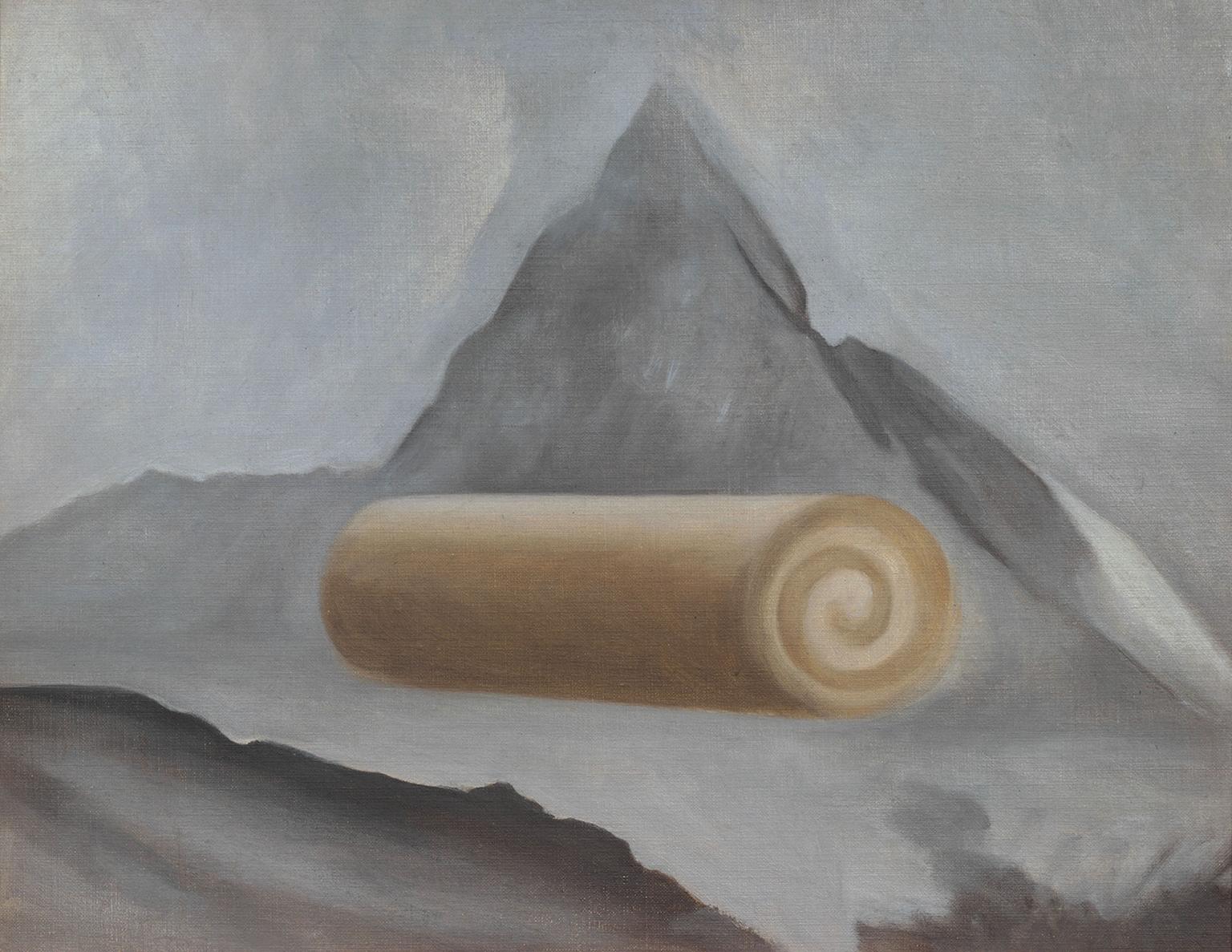
Humphrey Jennings, Swiss Roll 1939
26/30
artworks in Reality and Dreams
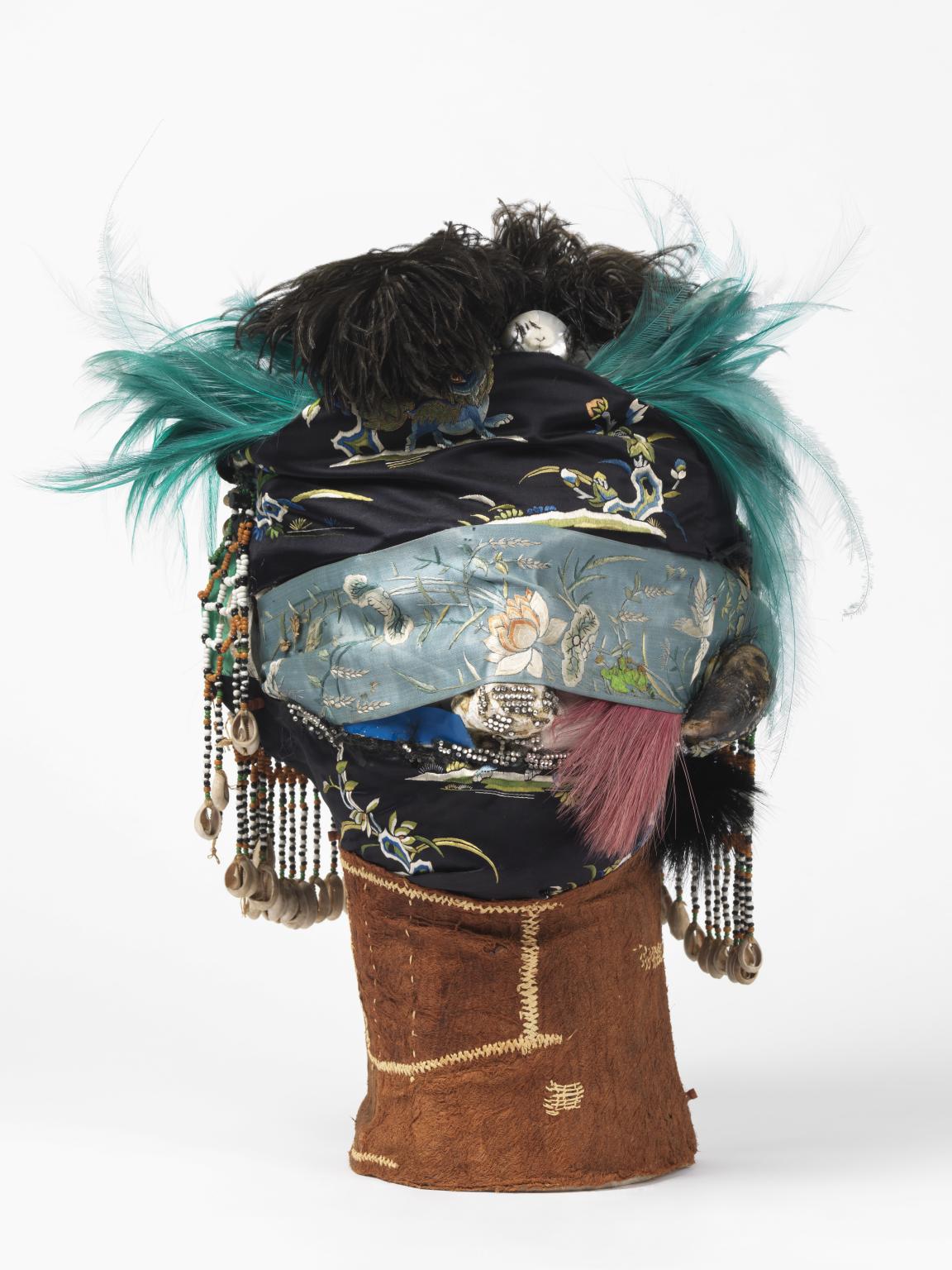
Eileen Agar, Angel of Anarchy 1936–40
The blindfolded Angel of Anarchy is loosely based on an earlier painted plaster head. Agar stated that with this new work she wanted to create something ‘totally different, more astonishing, powerful ... more malign’. It suggests the foreboding and uncertainty that she felt about the future in the late 1930s. Believing that women are the true surrealists, Agar wrote: ‘the importance of the unconscious in all forms of Literature and Art establishes the dominance of a feminine type of imagination over the classical and more masculine order.’
Gallery label, October 2016
27/30
artworks in Reality and Dreams
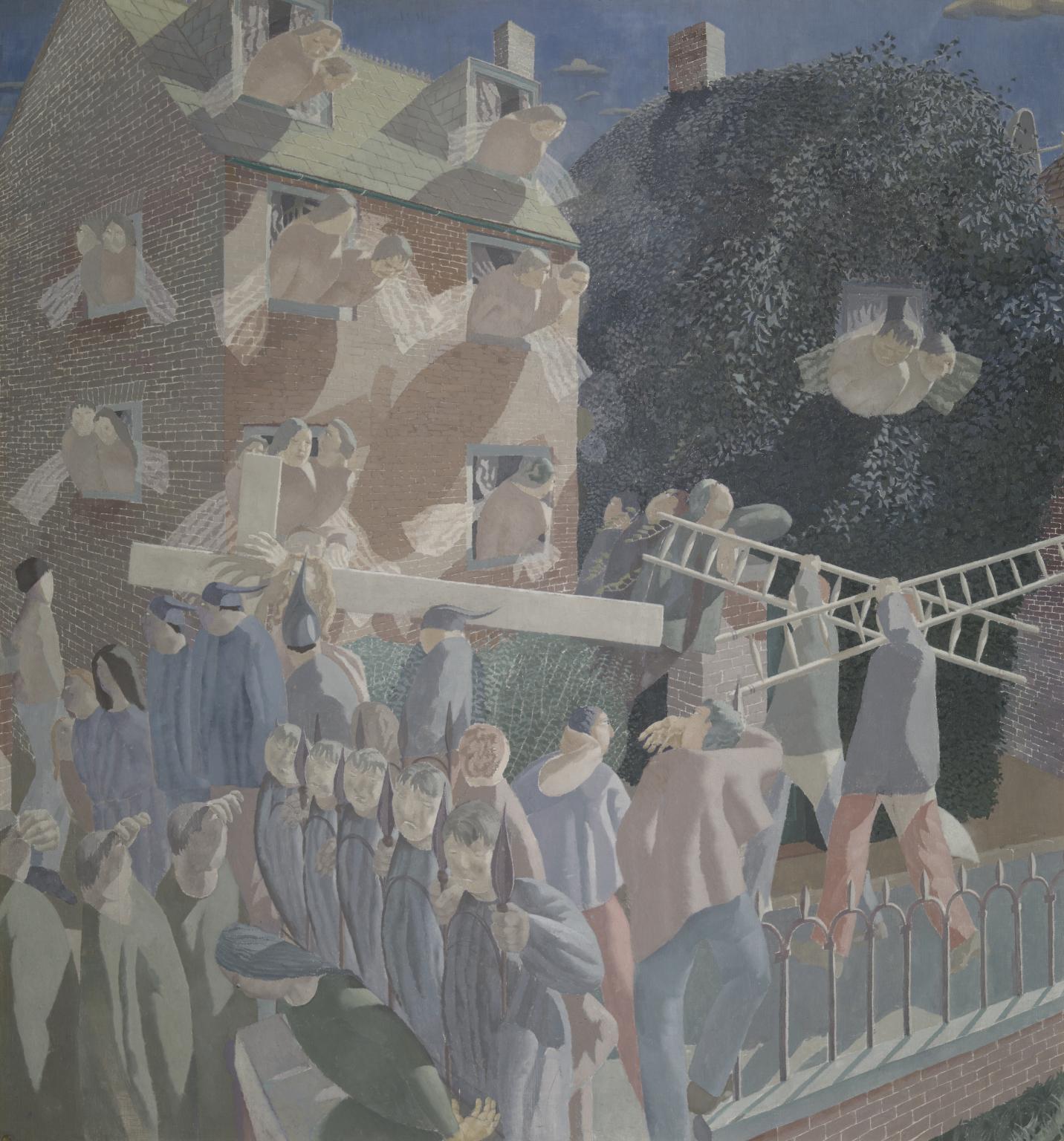
Sir Stanley Spencer, Christ Carrying the Cross 1920
Here Spencer depicts a scene from the end of Christ’s life taking place in his own hometown. In the biblical account, Christ carries the cross through Jerusalem, but Spencer sets the scene in the English village of Cookham. Spencer believed that religious feeling was present in everyday settings and events. This painting was partly inspired by watching builders carrying ladders down a Cookham street. These figures are present in the painting, following behind Christ. The Virgin Mary sits by a railing in the foreground. The brick house is the artist’s family home.
Gallery label, October 2020
28/30
artworks in Reality and Dreams
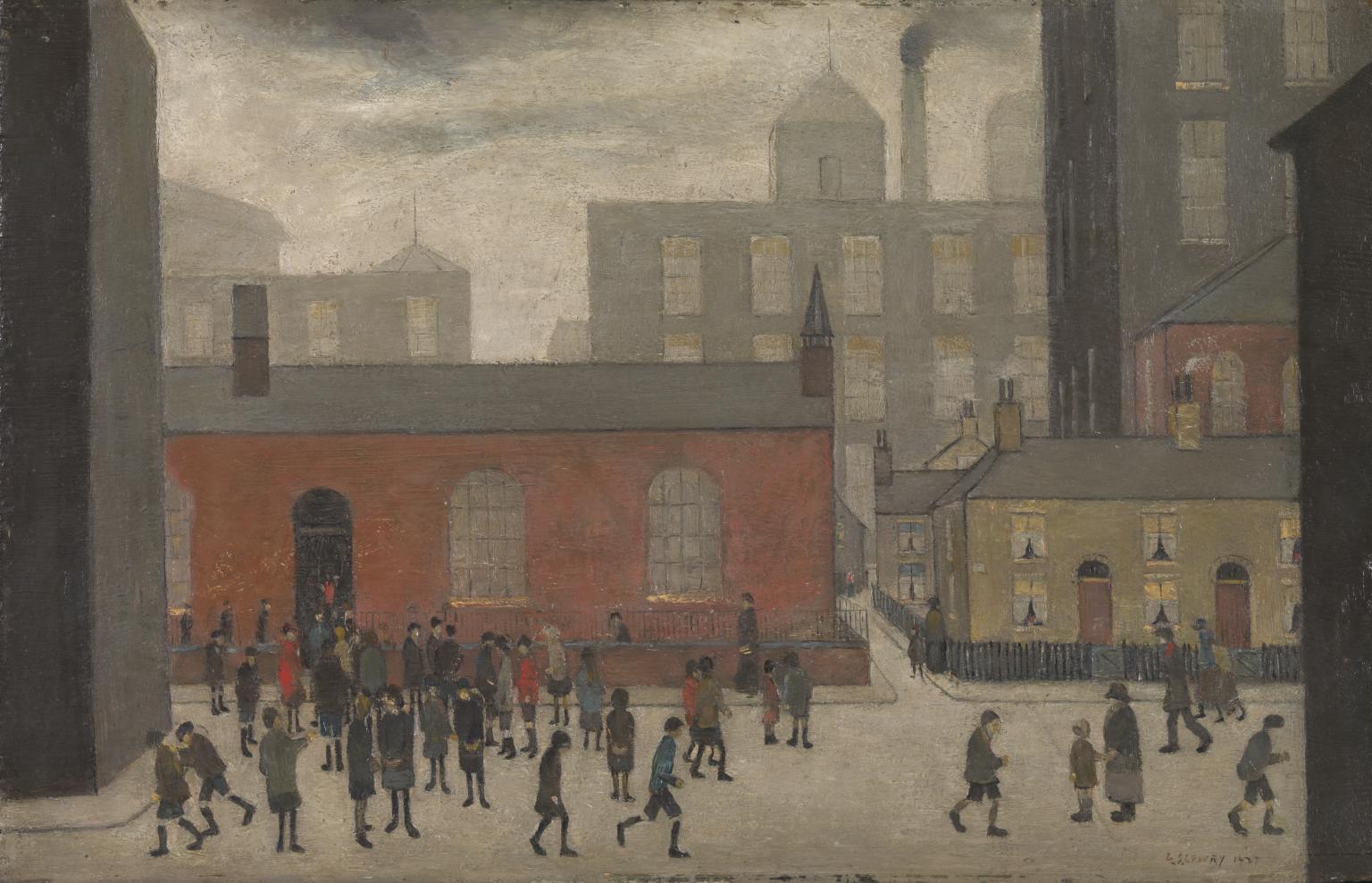
L.S. Lowry, Coming Out of School 1927
Like many of Lowry's pictures this is not a depiction of a particular place, but is based on recollections of a school seen in Lancashire. Lowry's combination of observation and imaginative power often produced images which capture a deeply felt experience of place, with which others could identify. For example, in 1939 John Rothenstein, then Director of the Tate Gallery, visited Lowry's first solo exhibition in London and later wrote: 'I stood in the gallery marvelling at the accuracy of the mirror that this to me unknown painter had held up to the bleakness, the obsolete shabbiness, the grimy fogboundness, the grimness of northern industrial England.' This work was then purchased by the Trustees.
Gallery label, April 1994
29/30
artworks in Reality and Dreams
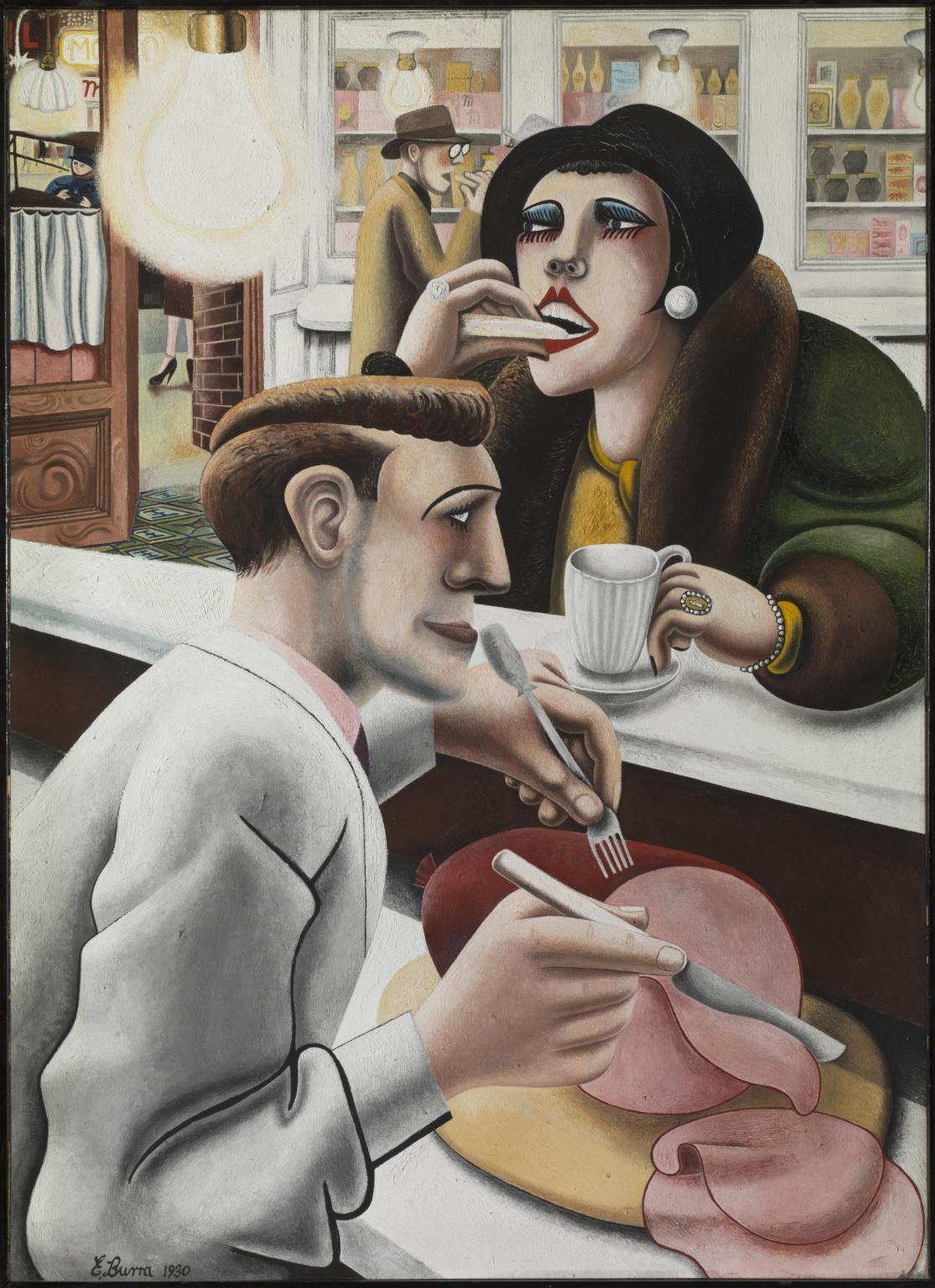
Edward Burra, The Snack Bar 1930
A peculiar tension exists between the customer and the barman slicing the ham in Edward Burra’s painting. His work took inspiration from everyday situations, often exaggerating the people he encountered into caricatures. Burra’s interest in depicting people on the margins of society, and the pair of high heels standing on a street corner in the background, have led to suggestions that this nighttime scene depicts sex workers. Though not a member of a surrealist group, Burra’s uncanny paintings were included in the 1936 International Surrealist Exhibition in London.
Gallery label, January 2025
30/30
artworks in Reality and Dreams
Art in this room
Christopher Wood
A Fishing Boat in Dieppe Harbour
1929
Paul Nash
Landscape at Iden
1929
Cecil Collins
The Promise
1936
Frances Hodgkins
Flatford Mill
1930
Glyn Warren Philpot
Repose on the Flight into Egypt
1922
Christopher Wood
Zebra and Parachute
1930
You've viewed 6/30 artworks
You've viewed 30/30 artworks